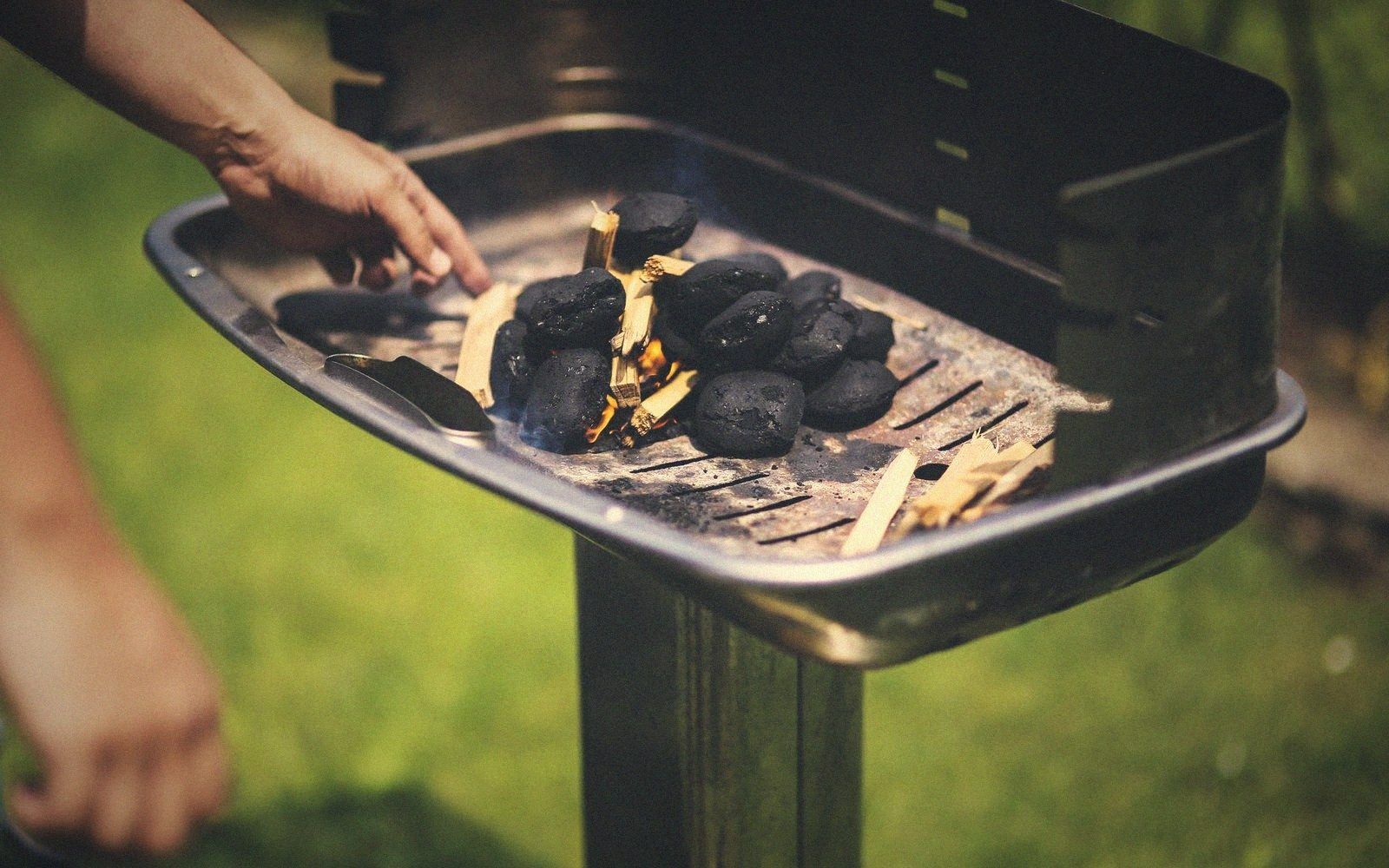
Chunk vs. chip: chunks smoulder; chips flare and burn off before meaningful smoke is released
Photo: Karolina Grabowska www.kaboompics.com / Pexels
01The bed comes first
Adding wood to a live fire is not the same as building a fire from wood. The distinction matters because the goal is smoke as a seasoning, not combustion as a heat source. Start with an established charcoal bed — grey-ashed, settled, producing steady radiant heat — and wood becomes a controlled addition to it, not the engine.
Hardwood chunks, not chips, hold the right relationship with a grill-scale fire. Chips combust too quickly, often flaring before they smoke; a chunk the size of a large fist can smoulder for twenty minutes against a coal bed, releasing the thin blue smoke that actually seasons food. Oak, cherry, and hickory are standard choices because they are dense, dry hardwoods with distinct but not aggressive aromatic profiles. Fruit woods run sweeter; hickory runs heavier. The difference is real and worth knowing, but smoke is an ingredient with its own logic — clean combustion produces the compounds that stick to meat in ways you want; thick white smoke deposits bitter particulates.
A handful on an established bed, not a firelog.
One or two chunks is usually enough. Three is often too many. The mistake is treating smoke volume as a proxy for smoke flavour, when what you want is a low, sustained wisp across the cook rather than a smothering grey column. Lay the chunk at the edge of the coal bed, where the heat is high enough to ignite it slowly but not so direct that it bursts into flame immediately. If it flames, the smoke is being converted to heat, not flavour.
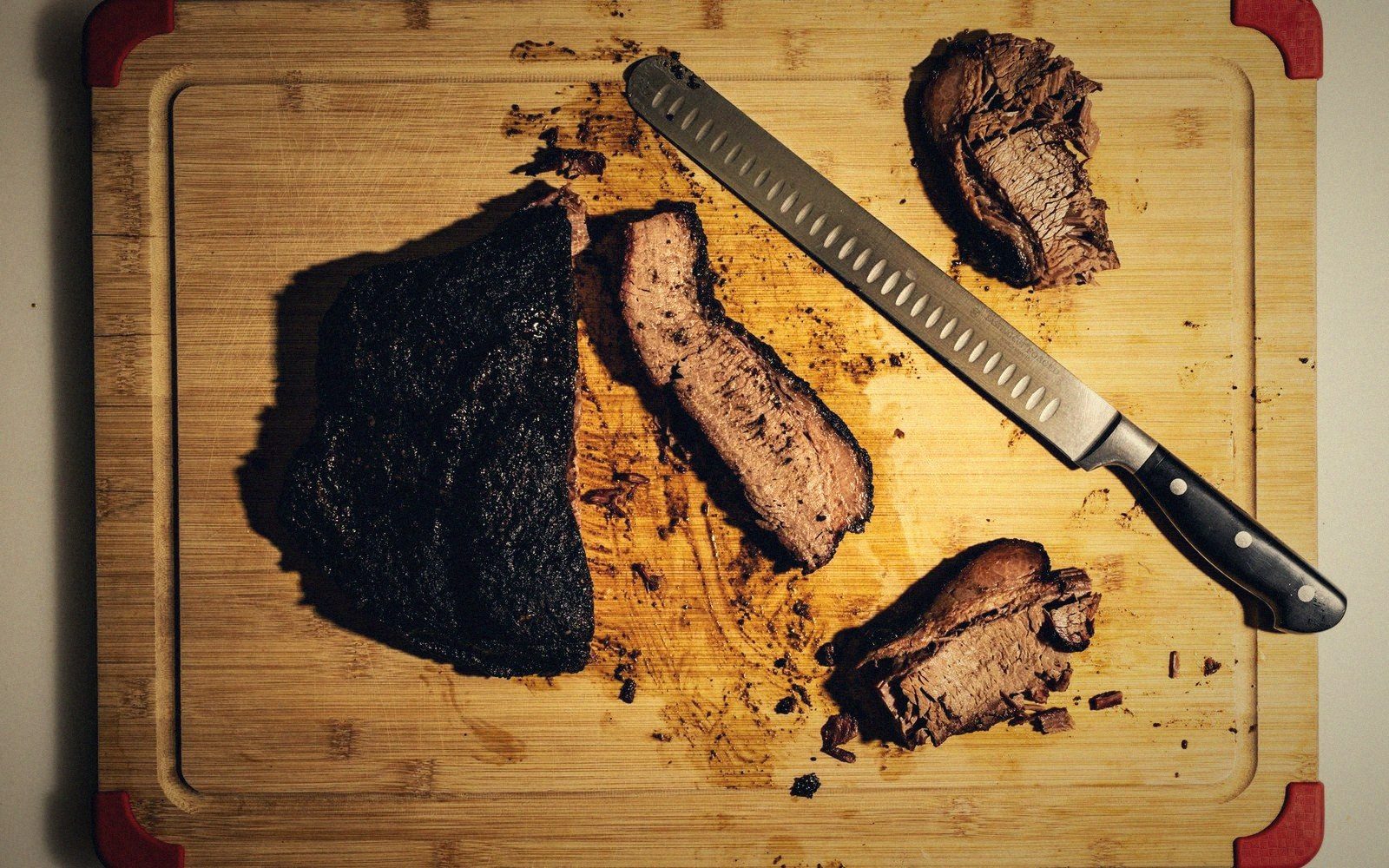
Timing matters as much as placement. Add wood early in a long cook — brisket, shoulder, ribs — and the smoke has time to build the exterior layer of flavour that becomes part of the bark. Add it late and most of the aromatics disperse before the surface has time to absorb them. Proteins and fats on the meat's surface are most receptive early, before the exterior begins to tighten and seal.
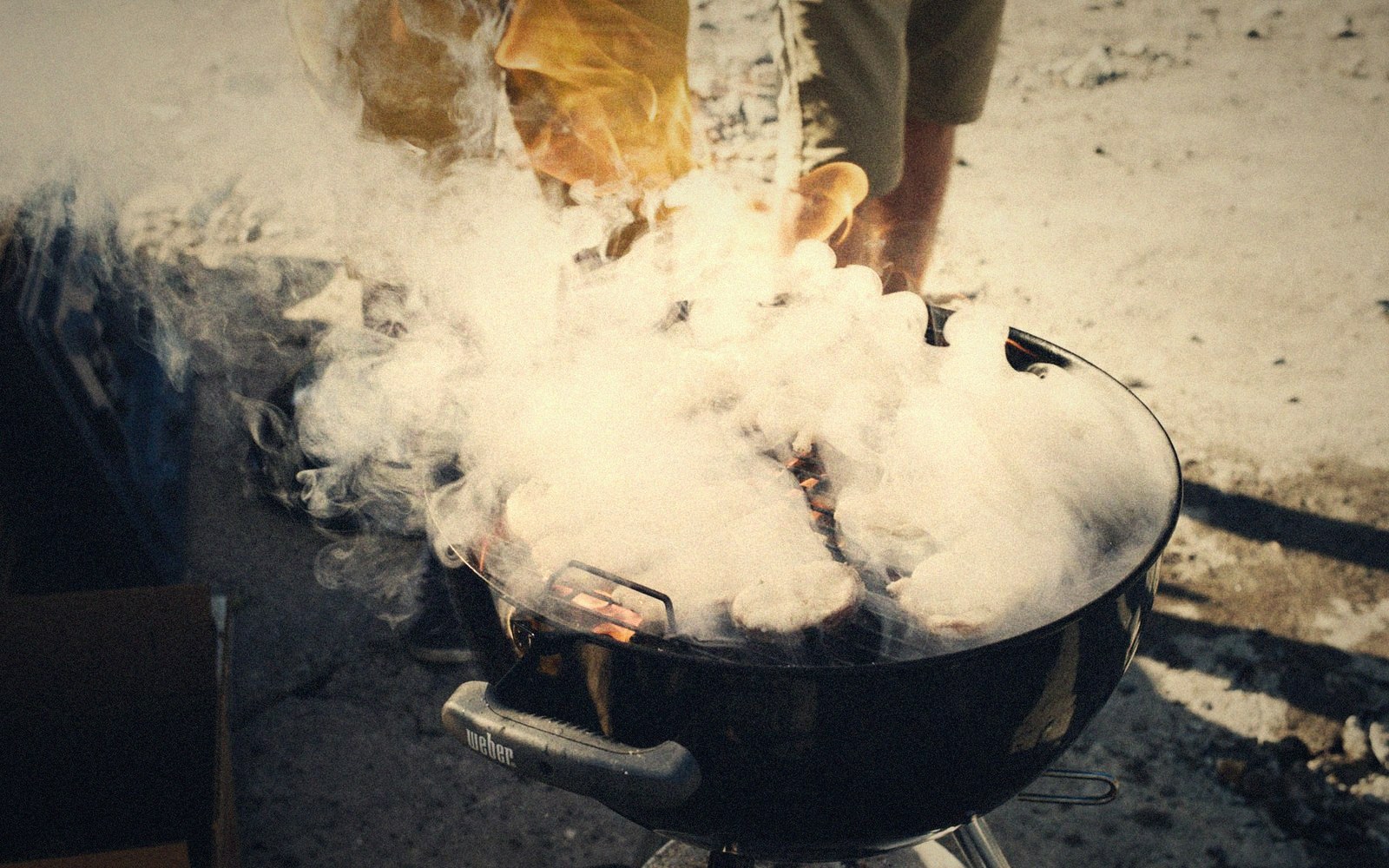
With shorter cooks — a thick steak, a spatchcocked bird — a single chunk at the start of the cook is often all the smoke the food needs or can use. At grill temperatures, smoke contact is brief regardless of what you add; the coal bed's radiant heat is still doing most of the work.
The wood is a small, deliberate gesture on top of an already functional fire. That order — coals first, wood after — is what keeps it in control.
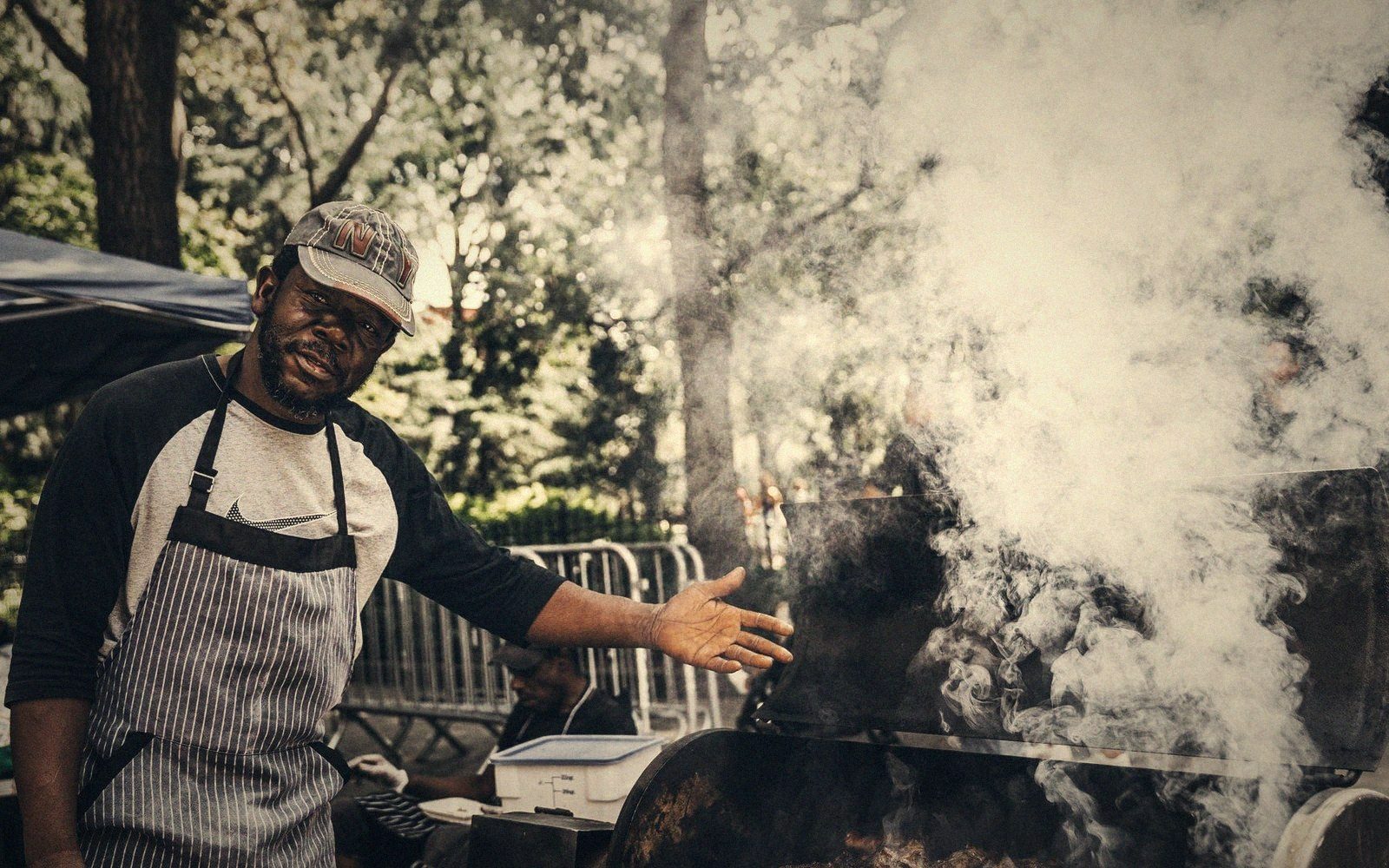
Wood chunks placed directly on the coals burn slowly and give steady smoke
Photo: Andras Stefuca / Pexels
Read with this
Entries the register ties to this one.