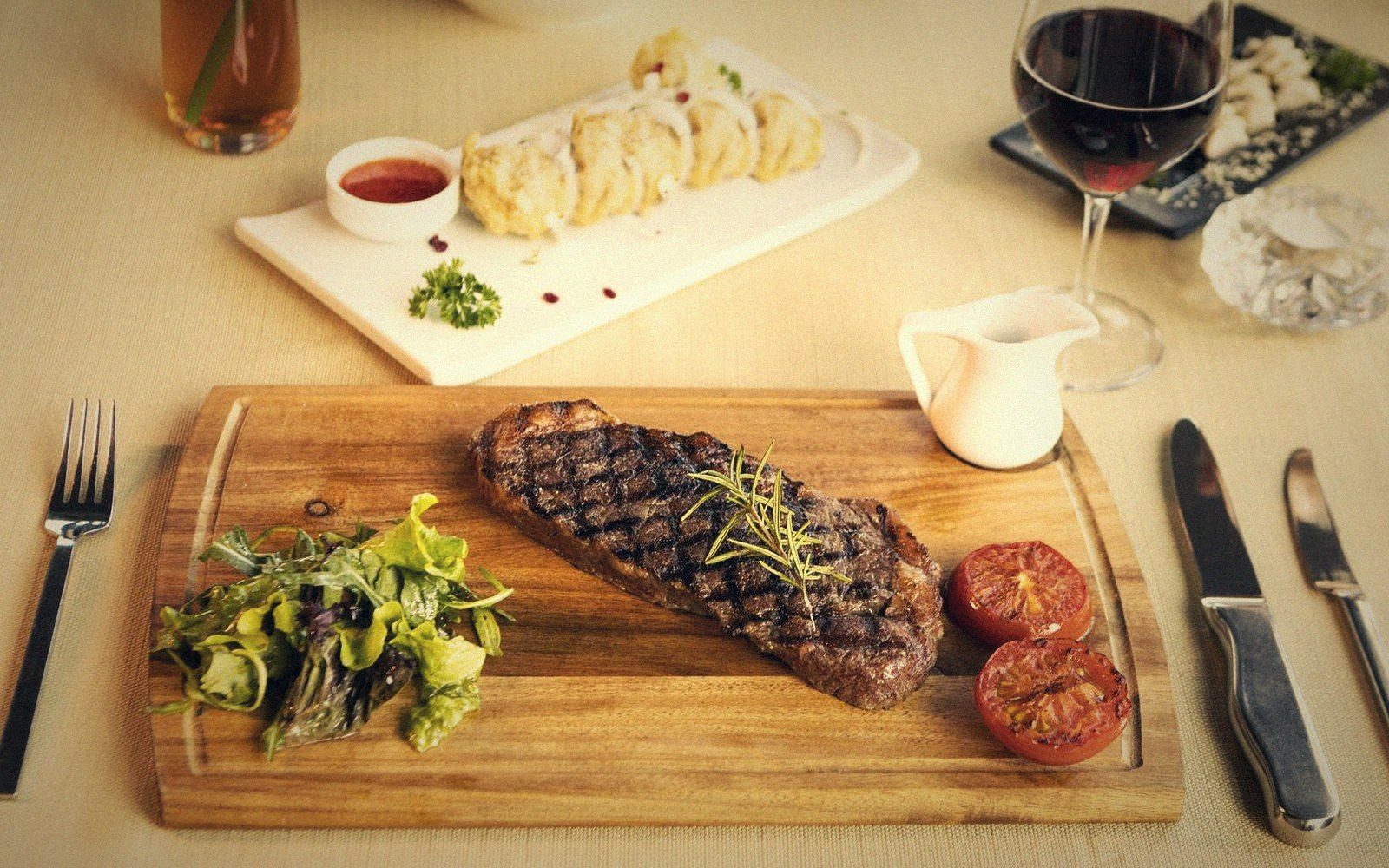
Myosin: the first major muscle protein to denature, at moderate internal temperatures; its contraction drives moisture inward
Photo: Farhad Ibrahimzade / Pexels
01The juice isn't running anywhere — but the fibres are
Pull a thick cut from the fire, slice it immediately, and the board fills with liquid. That liquid is not proof the meat needed more time; it is proof the fibres did not have a chance to relax. Understanding the difference changes how you think about the whole back end of a cook.
Muscle fibre contracts under heat. At the temperatures that produce a good sear, the proteins — principally myosin and then actin as heat climbs — tighten and squeeze moisture toward the centre of the cut. The gradient between the hot exterior and the cooler core is steep right off the grate. Slice through it at that moment and you are cutting across fibres still under tension, still pushing fluid outward. The liquid pools on the board because you opened a pressurised system before it had equalised.
What is actually happening, and why the argument persists.
What resting does is let that gradient flatten. Heat continues to move inward — carryover cooking — while the outer layers cool fractionally. The fibres, no longer contracting against a hot exterior, loosen. Moisture redistributes. By the time you cut, the whole cross-section is closer to a single temperature and the fibres hold rather than expel their liquid.
How long matters, and it scales with mass. A steak an inch thick needs five to seven minutes; something like a whole brisket or a bone-in shoulder, which holds enormous thermal mass, can rest loosely tented for thirty to forty-five minutes and still arrive warm at the table — the interior continues to rise and then slowly descends. The tenting question is real: foil traps steam, which softens crust. A loose tent over a thick cut is a compromise; no tent at all is fine if the room is warm and you are not waiting long. A cooler lined with a towel is not a trick — it is physics, holding the ambient temperature around the meat so the gradient collapses slowly rather than racing to room temperature.
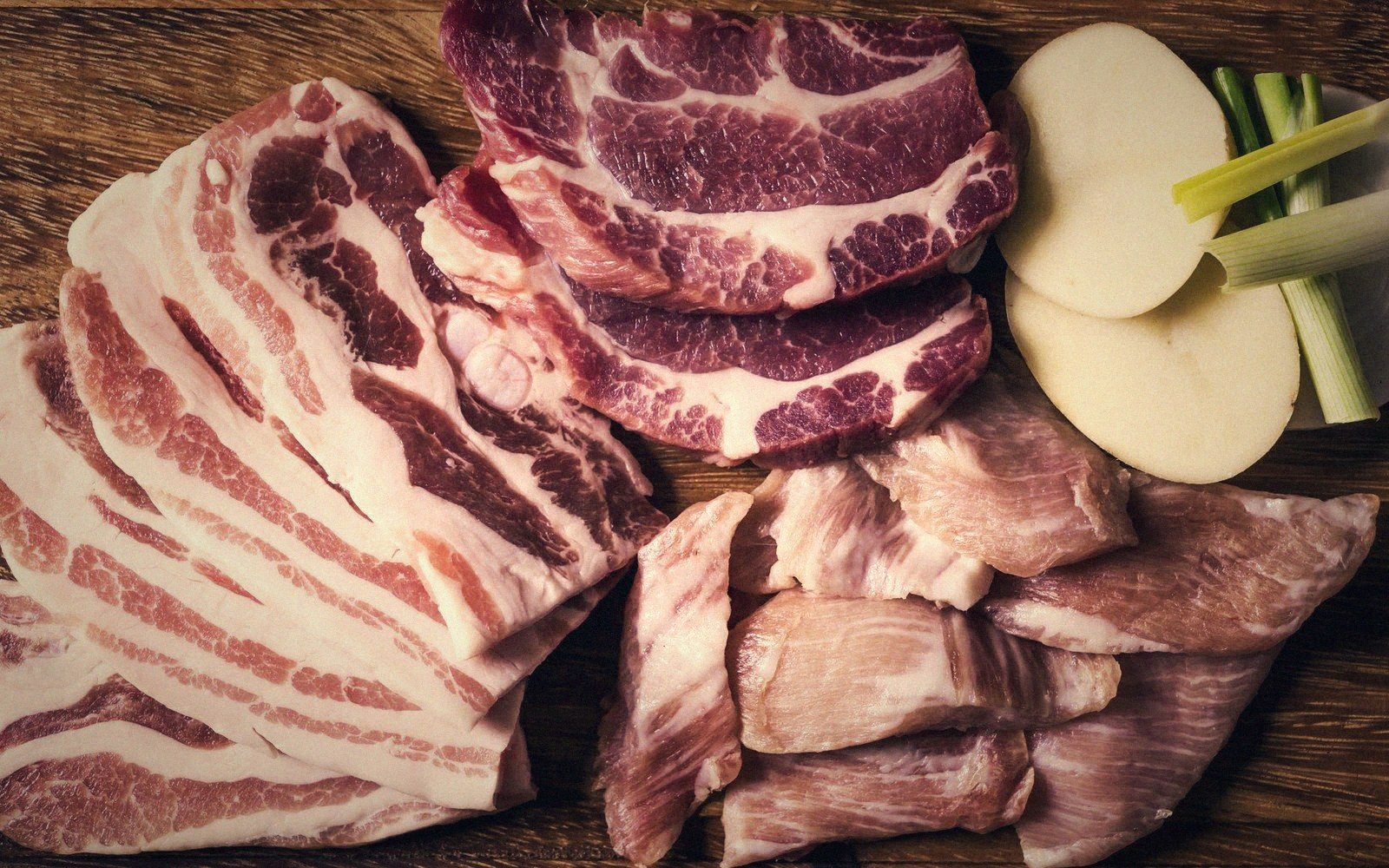
The argument that resting "lets the juices redistribute" is technically imprecise but practically correct. The juice is not migrating from one end to the other like water finding its level; what is happening is that relaxed fibres retain moisture that contracted fibres would expel. The outcome — a juicier slice — is real even if the mechanism is slightly different from the folk description.
The persistent counter-argument is carry-over cooking and the fear of a cold centre. It is a reasonable concern on thin cuts; on anything with real depth, heat loss is modest and the rested temperature at the centre will still read well. Trust the mass. The fire did its work; let the meat finish its own.
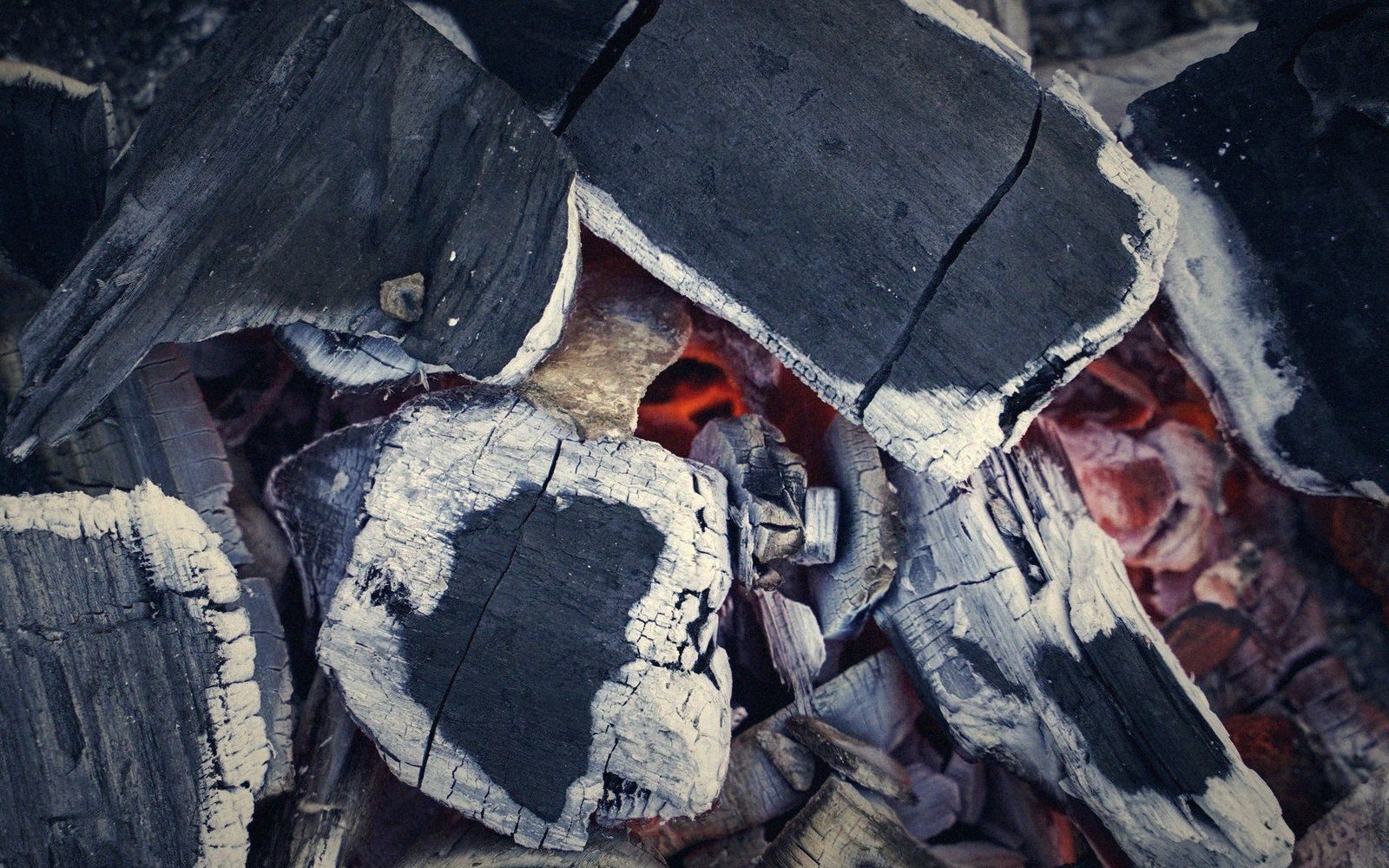
mid-article, illustrating even redistribution
Photo: Vilnis Husko / Pexels
Read with this
Entries the register ties to this one.