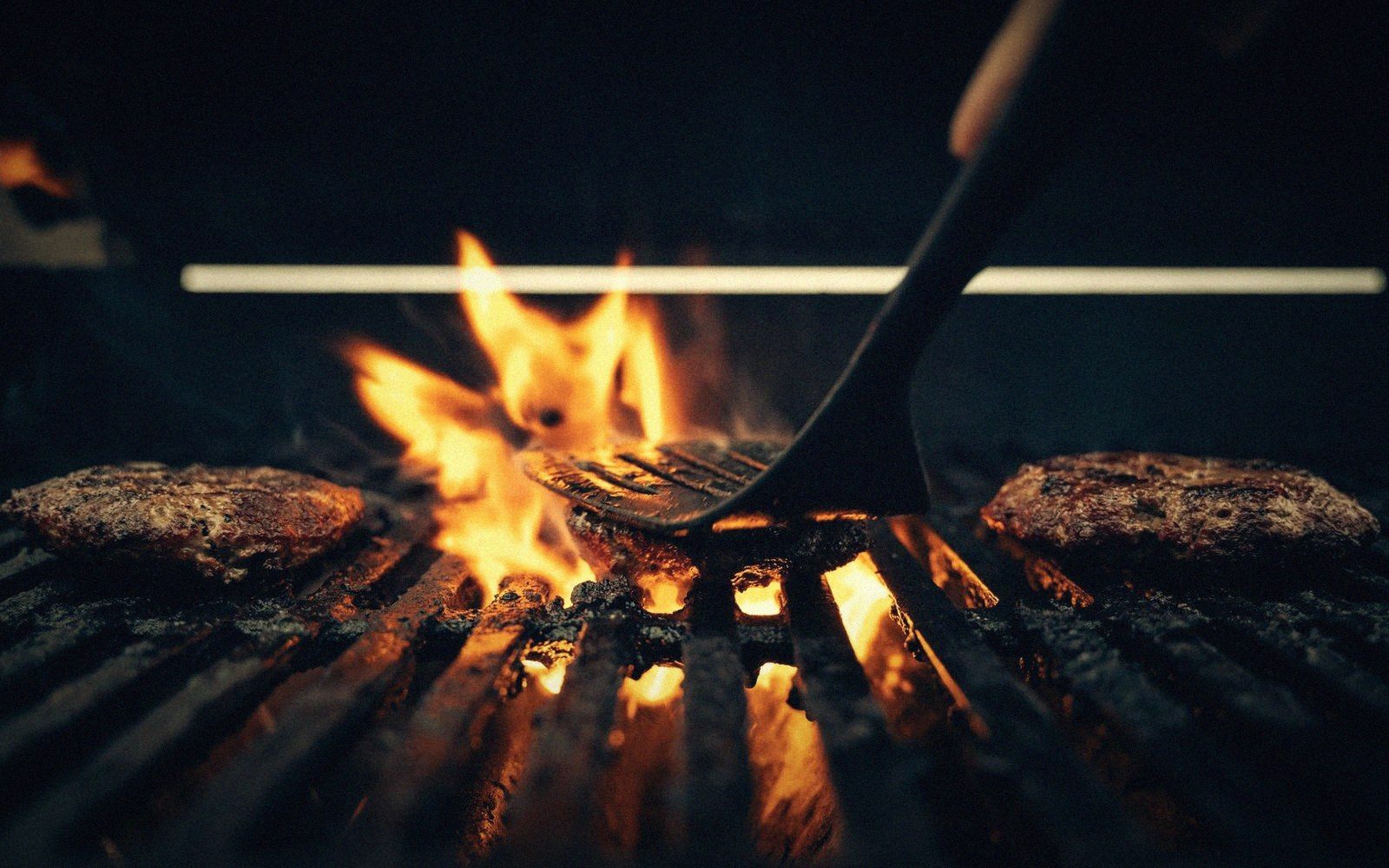
Maillard reaction: surface browning driven by heat reacting with proteins and sugars; needs dry surface and sustained contact
Photo: Chris F / Pexels
01Leave It, or Don't
The single-turn doctrine is older than any cookbook: put meat on the grate, leave it alone, turn it once, finish it, done. The logic is sound. Every time you lift the meat you interrupt contact, and contact is the thing browning the surface — the Maillard reaction needs sustained, dry heat against dry meat. Lift too soon and you peel off whatever thin crust is forming. Lift repeatedly and you cycle the surface through cool air, drop the grate temperature under it, and keep resetting the clock.
What actually happens when you leave it is this: the surface moisture drives off, the proteins stiffen and release their grip on the bars, and the crust begins to set. A piece of meat that sticks is almost always a piece of meat that isn't ready to move. That resistance is information — wait another thirty seconds and it will tell you when it's done by letting go. Forcing it early tears the surface and leaves browned fragments on the grate instead of on the meat.
The argument for leaving it alone, and the case against.
So the single turn has genuine mechanical justification. But it is not a commandment.
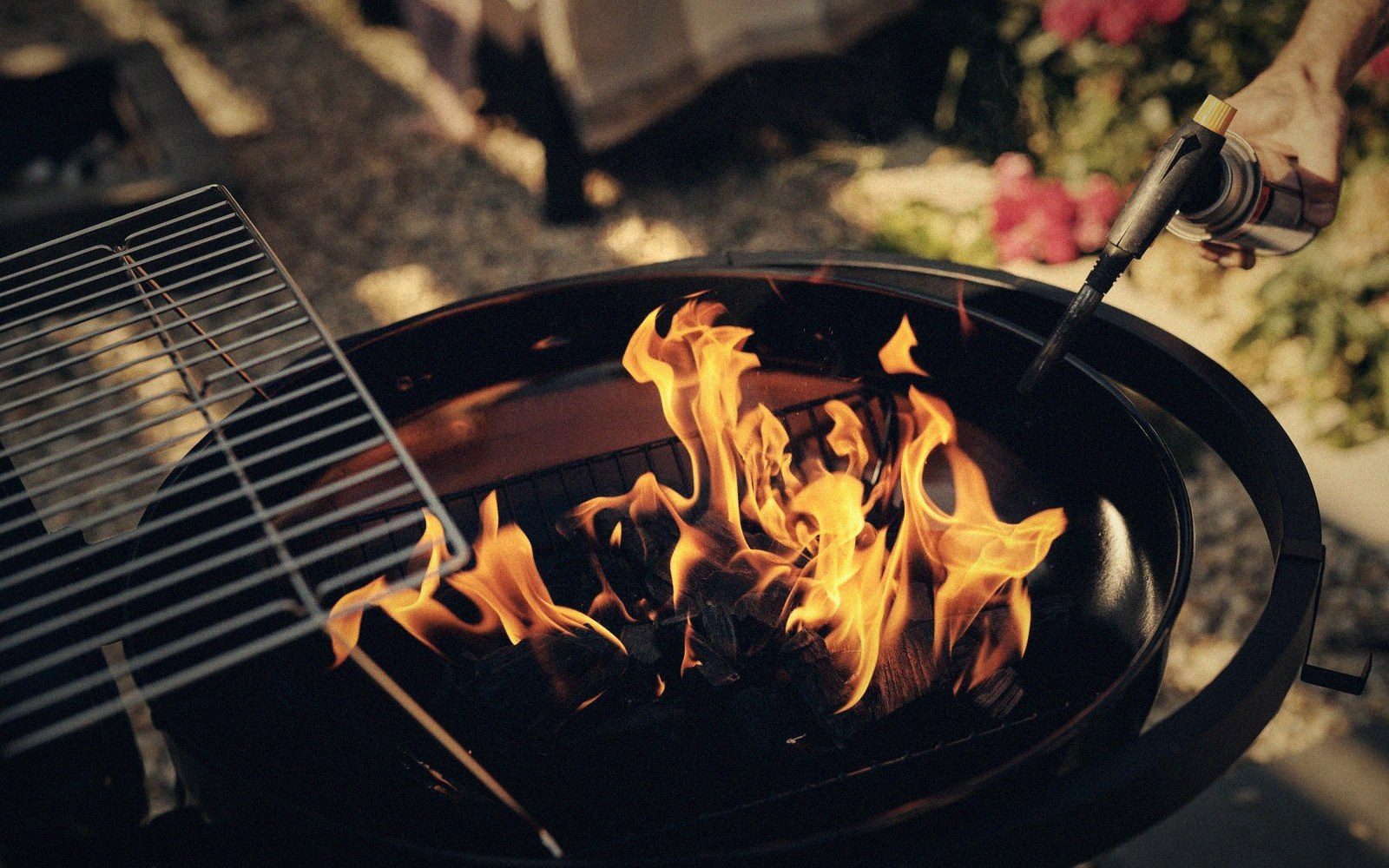
The case against rigid single-turn thinking is about heat management, not impatience. On a very hot fire with a thick cut, holding one side down long enough to build crust can carry the interior further than you want before the turn. Multiple short flips — every thirty to sixty seconds over screaming-hot coals — keep the surface temperature high on both sides without driving sustained conductive heat deep into the centre. The cook runs hotter at the exterior and cooler through the middle, which is the opposite of what prolonged single-side contact does. Some cooks use this deliberately for thicker steaks: build the crust fast, manage the centre separately with indirect heat, finish to temperature off the fire.
The real variable is crust quality versus interior control, and those two things pull in opposite directions. A single turn favours crust formation and simplicity. Multiple flips favour temperature management and precision. Neither is wrong; both are trades.
What is wrong is flipping constantly out of anxiety, or lifting to check before the surface has released. That costs you crust, loses rendered fat to the coals, and tells you nothing useful. If you're going to flip more than once, do it with a reason — a specific time interval, a specific fire — not because you couldn't keep your hands off it.
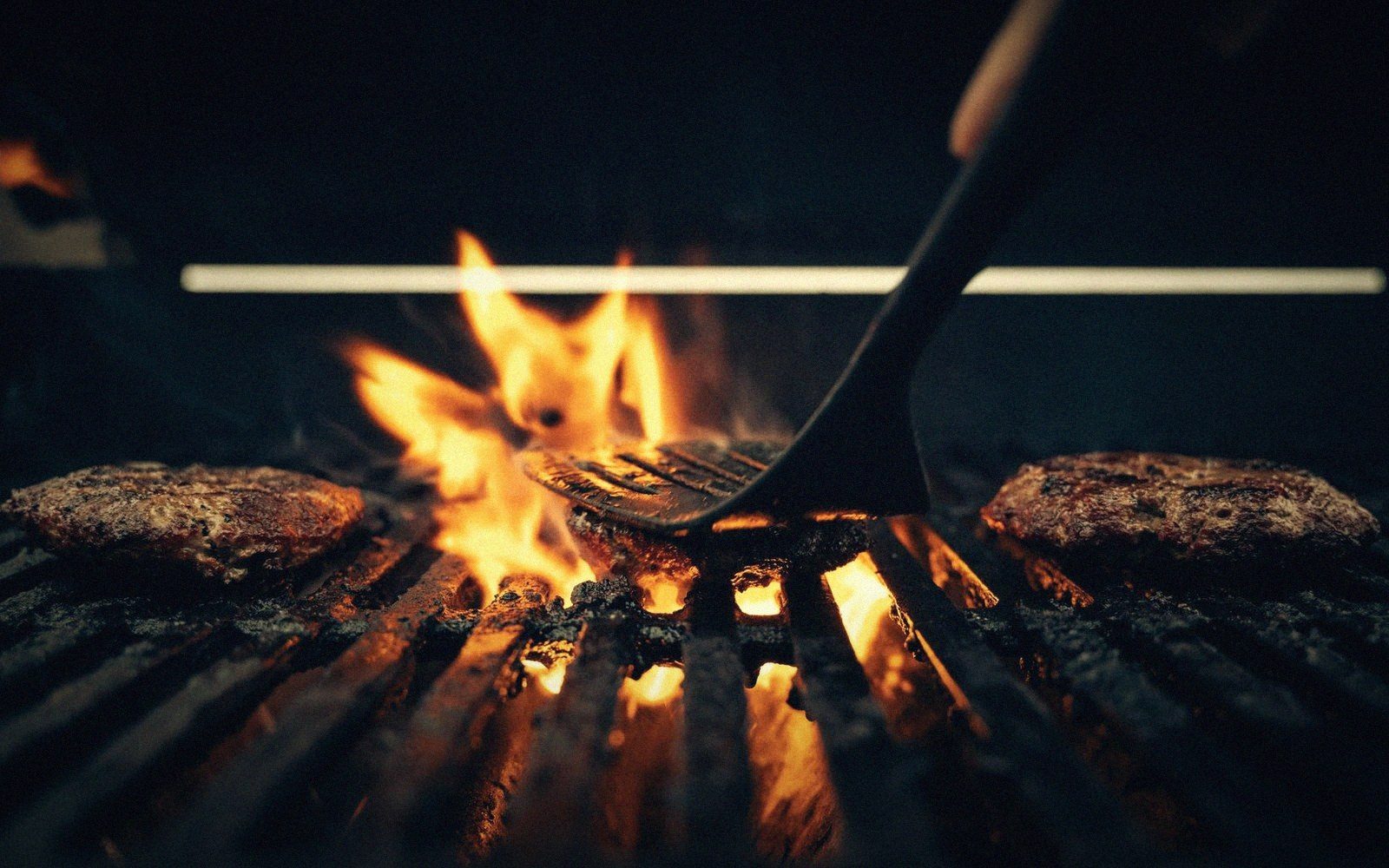
the moment of the turn, grate clearly hot underneath
Photo: Chris F / Pexels
Read with this
Entries the register ties to this one.