Smoke is an ingredient
Season with it the way you would salt: with intent, in the right amount, at the right moment.
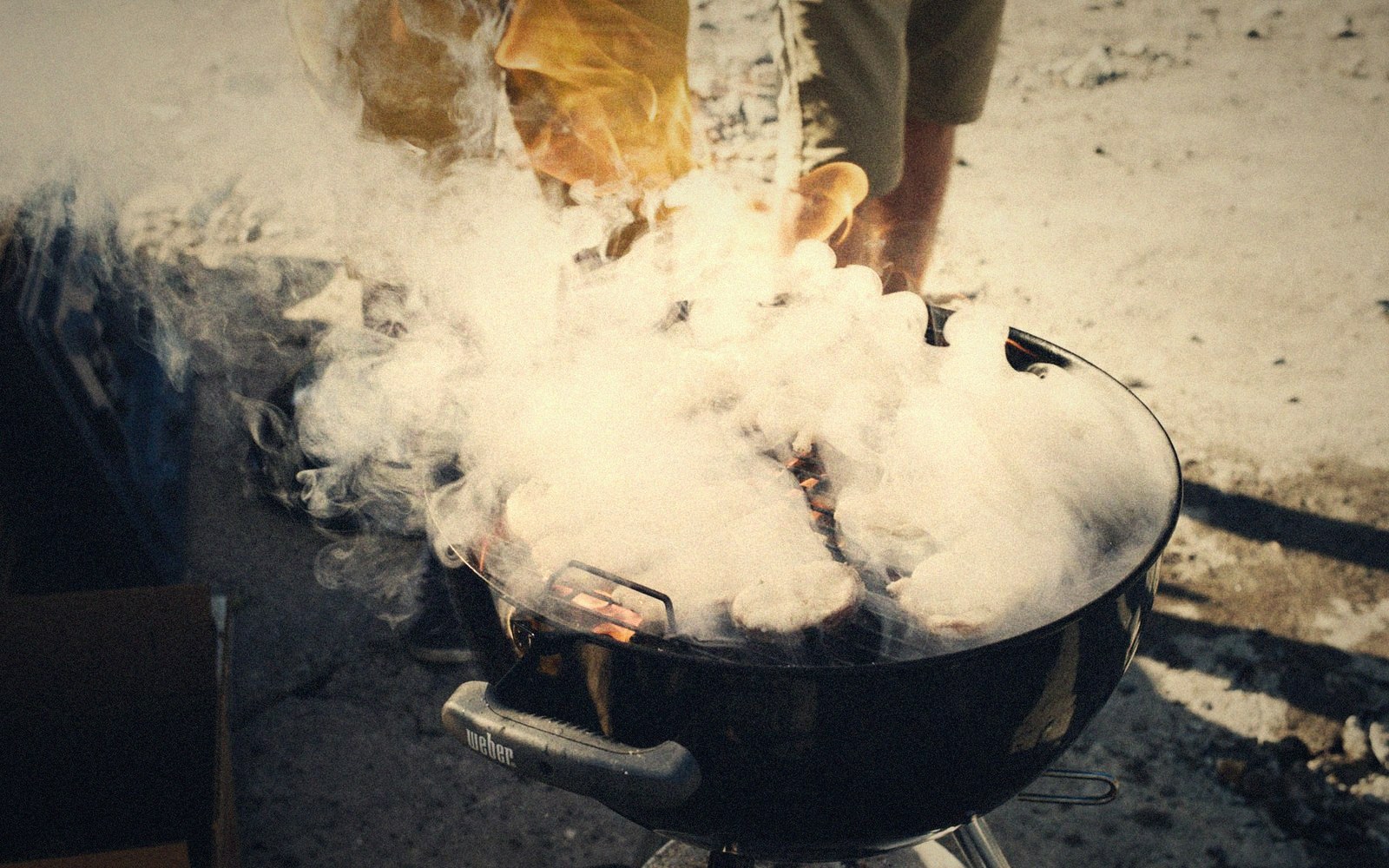
Clean smoke: thin, blue-grey; incomplete combustion kept to a minimum by adequate airflow; carries phenolic compounds that season and preserve
Photo: Alexey Demidov / Pexels
01What the fire is actually producing
Smoke is not a single thing. It is a suspension of gases, water vapour, and fine particles thrown off by incomplete combustion, and its composition changes radically depending on how hot the wood burns and how much oxygen the fire gets. The version you want is thin, nearly transparent, with a blue-grey tint — sometimes called clean smoke for the obvious reason. The version you do not want is thick and white or, worse, grey-black: dense with unburned hydrocarbons, creosote and particulates that land on the meat and stay there as bitterness.
The difference between the two is almost entirely airflow. A starved fire smoulders. Smouldering combustion runs cooler, produces more partial-burn byproducts, and generates the acrid thick smoke that tastes of a fireplace gone wrong. An oxygenated fire burns hotter and more completely; the volatile compounds in the wood combust rather than condensing out as particles, and what reaches the meat is a refined vapour that carries guaiacol, syringol and other phenolic compounds — the molecules responsible for the flavour you actually want.
Clean thin smoke seasons; thick white smoke deposits soot and tastes of it.
02How smoke actually seasons
Those phenolic compounds are not just flavour; they are mild antimicrobials, which is part of why smoke was historically a preservation tool before it was a culinary one. At grate level they deposit on the meat's surface and penetrate incrementally — the outer few millimetres over a long cook, a shallower layer over a short one. Combustion gases (nitric oxide and carbon monoxide) also react with the myoglobin in red meat to produce the smoke ring, the pink band beneath the crust that signals a low-and-slow cook done in a smoky environment. The ring is not a flavour indicator on its own, but it is a reliable sign that the meat spent time in the right conditions.
The critical window is early. Smoke compounds bind most readily to a cool, moist surface. Once the exterior of the meat has dried and begun to form a crust, uptake slows dramatically. A wood over coals strategy — a handful of wood added to an established charcoal bed when the meat first goes on — exploits this window directly. Chasing smoke flavour late in the cook by piling on more wood mostly just produces more thick smoke, not more flavour.
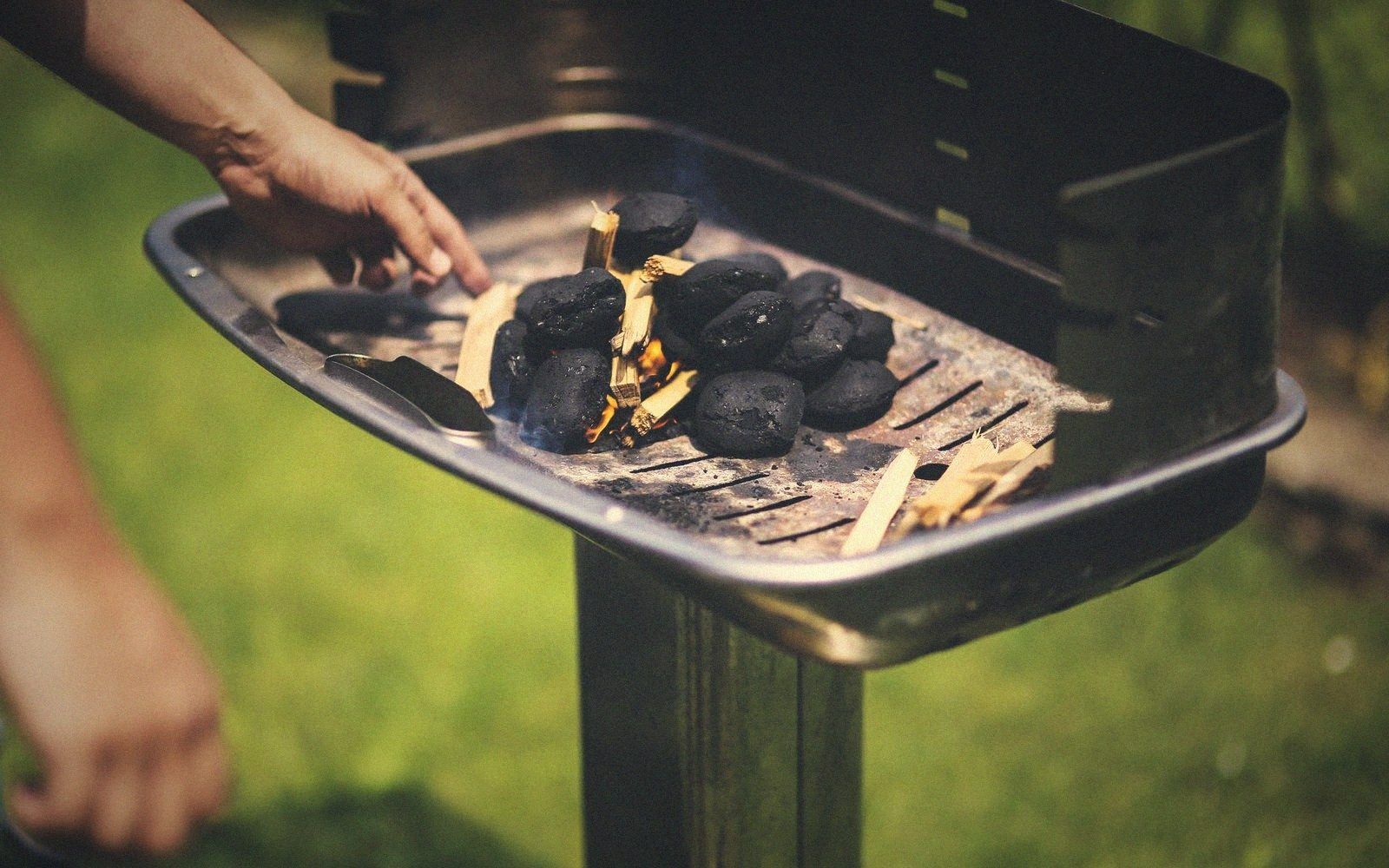
Quantity matters as much as quality. Smoke is an ingredient, not an atmosphere, and over-smoking is one of the more common and irreversible mistakes in long cooks. The goal is integration: smoke flavour that reads as part of the meat, not a separate layer of char-bitterness laid over the top. Less wood than you think, for less time than you expect, producing thinner smoke than you assume looks correct.
03Managing it in practice
Airflow is the control. On a lidded grill, the bottom vent feeds oxygen to the fire; the top vent lets combustion gases escape. Both should be open enough to sustain clean combustion whenever you are smoking — closed vents choke the fire and bring thick smoke back. The lid is not optional here: it is what makes the smoke circulate around the meat rather than vanishing into the air. Off, and you lose almost all of it.
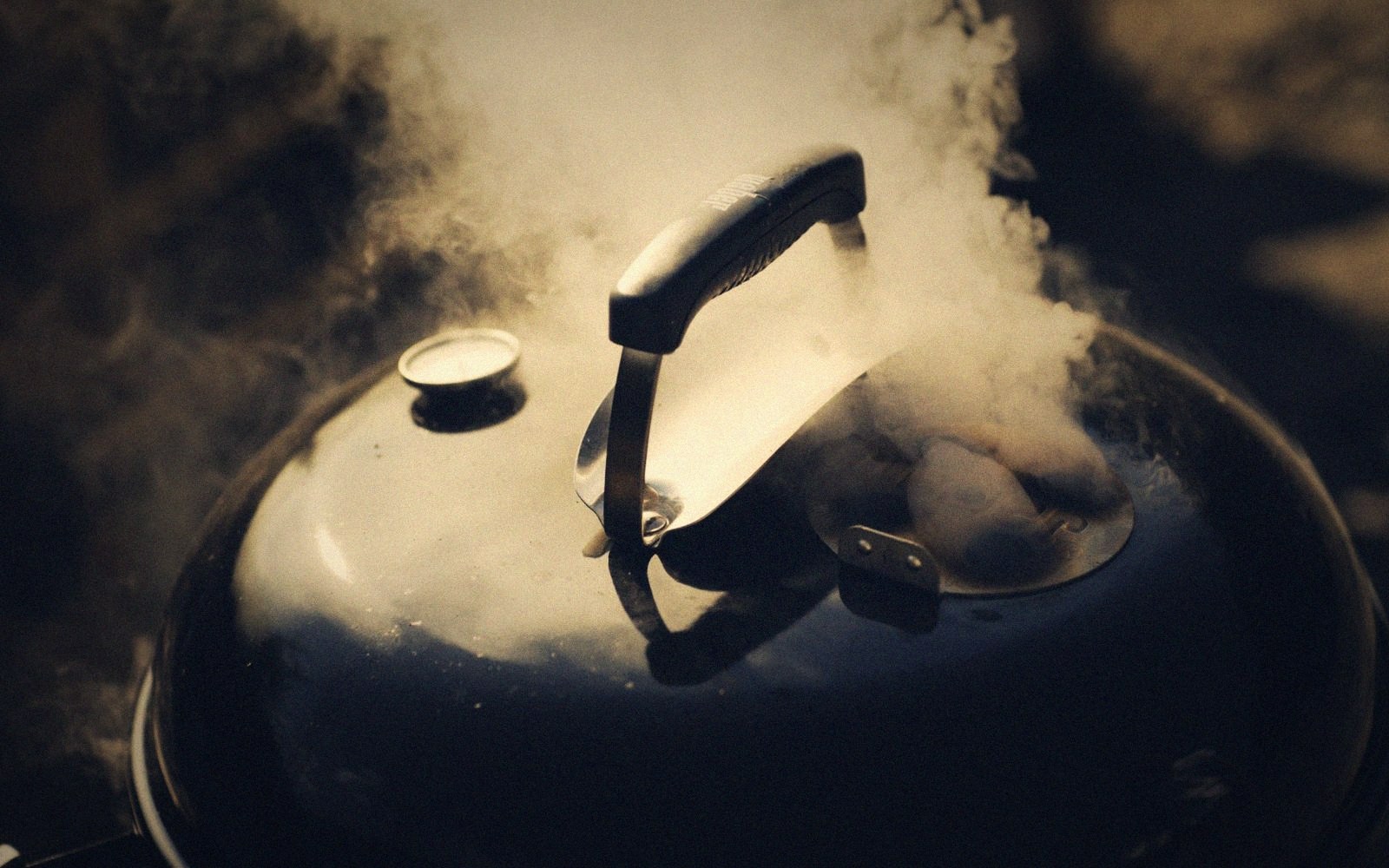
Watch the colour at the vent. Thin blue-grey rising from the top vent means the fire is burning cleanly. White or grey-white billowing means something is wrong — wood that is too wet, a vent that is too closed, or fresh fuel that has not yet caught. Wait it out. Put the lid back and let the fire stabilise before the smoke goes near the meat. The meat will wait. Bad smoke compounds do not cook off; they stay.
Treat smoke like any other seasoning: early, measured, intentional, and less than you think you need.

alongside the "How smoke actually seasons" section
Photo: Andras Stefuca / Pexels
Read with this
Entries the register ties to this one.