Reading the Coals
You can't dial in a live fire. You read it — and the signals are written in colour, height and time.
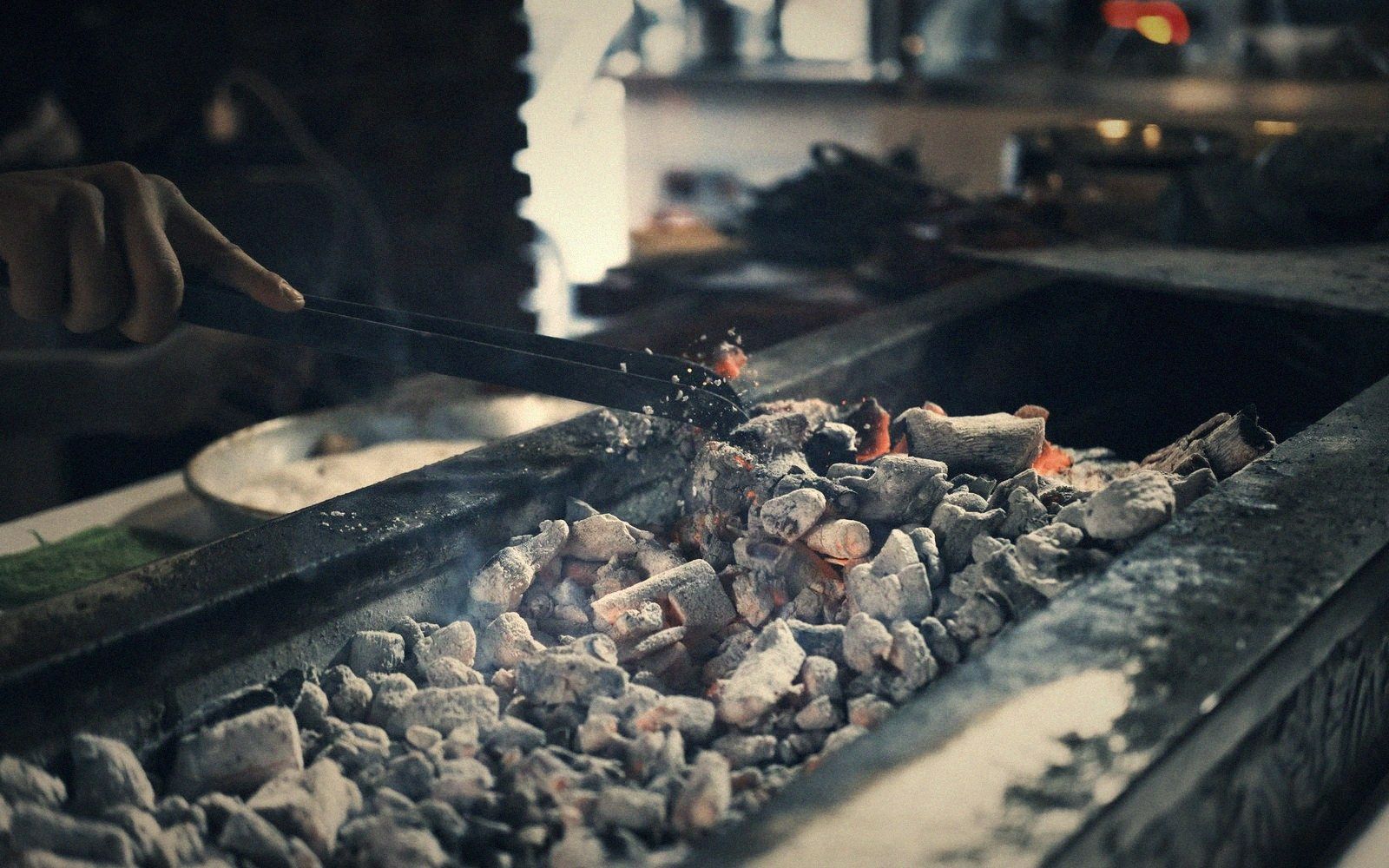
Thick white ash, glow obscured: declining heat, past peak output
Photo: Cemrecan Yurtman / Pexels
01What the Ash Is Telling You
A fresh charcoal bed looks wrong before it looks right. Black chunks going orange, then losing colour as a grey-white crust spreads inward from the edges — that progression is not just visual. The ash layer forming on the outside of each piece is the byproduct of complete combustion, and its colour tells you where in the burn cycle the fuel sits.
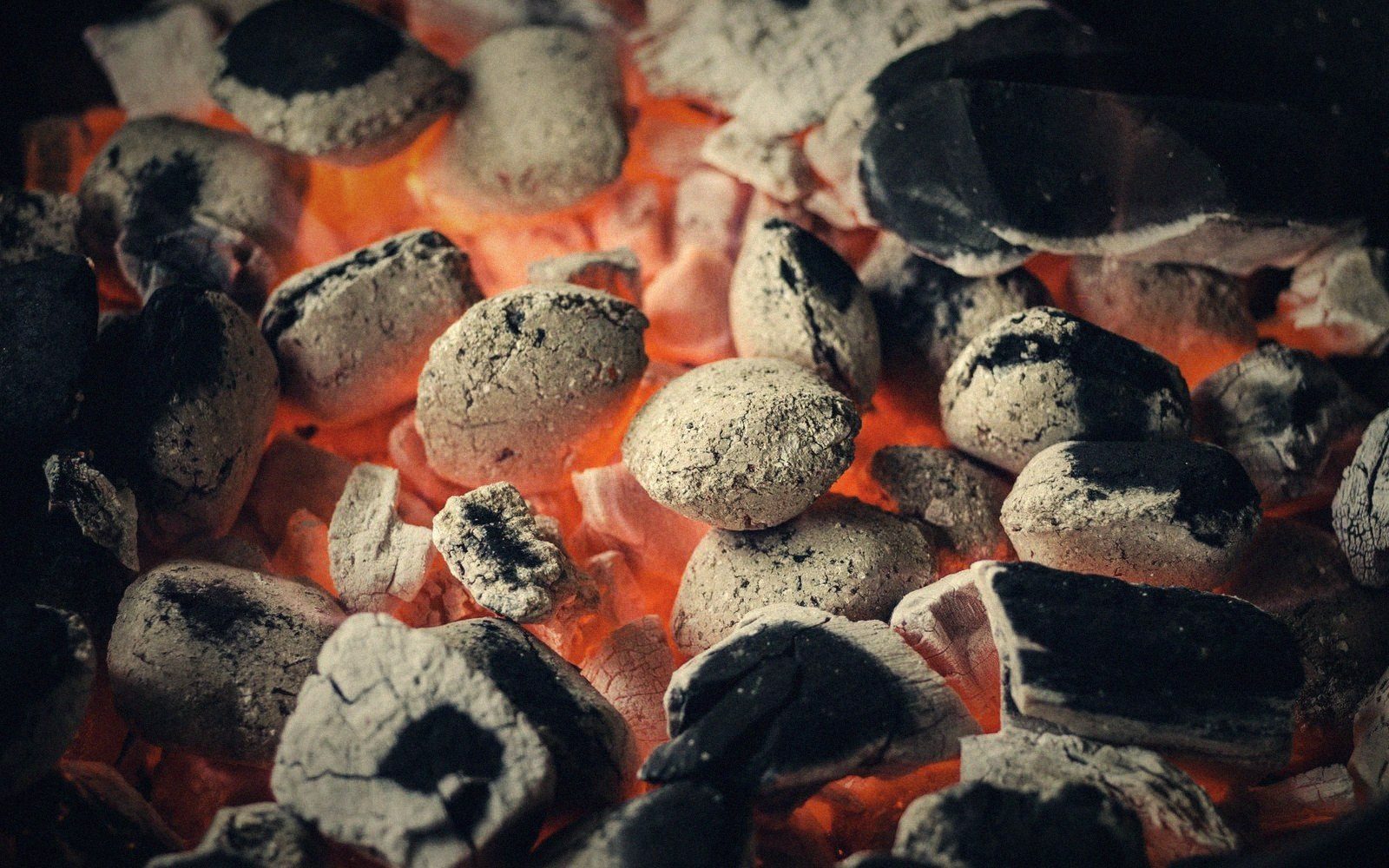
Charcoal with a thin, even coating of pale grey ash and an orange glow visible in the cracks is at peak output. The surface is dry, combustion is clean, and radiant heat is stable. Heavy white ash — thick, powdery, starting to obscure the glow — means the bed has passed its peak. It is still cooking heat, but it is declining heat, and you need to know that before you lay anything on the grate. Black patches mean incomplete combustion, usually from lighting too early or piling fuel too densely. That part of the bed is not contributing; it is just sitting there.
Ash colour, the hand test, and why a thermometer at grate height tells you less than you think.
The colour read works across the whole bed, not at a single point. Scan it. A patchy bed — some grey-white, some still dark — has hot and cool zones that do not follow your plan. Work with what is actually there, not what you expected twenty minutes ago.
02The Hand Test, Done Correctly
The hand test has a reputation for imprecision, and that reputation is half-deserved — mostly because people do it wrong. Hovering a palm vaguely over the grate at chest height tells you almost nothing useful. Done at grate height, palm down, held steadily at five to six inches above the cooking surface, it gives you genuine zonal information in real time.
The calibration is straightforward. If you can hold the position comfortably for six or seven seconds, you are in low-heat territory, suitable for a long indirect cook. Four to five seconds is medium — good for thick cuts that need time through the middle. Two to three seconds is high heat, where crust forms fast. If you are pulling your hand away inside two seconds, the bed is at its hottest, useful for a hard initial sear and not much else.
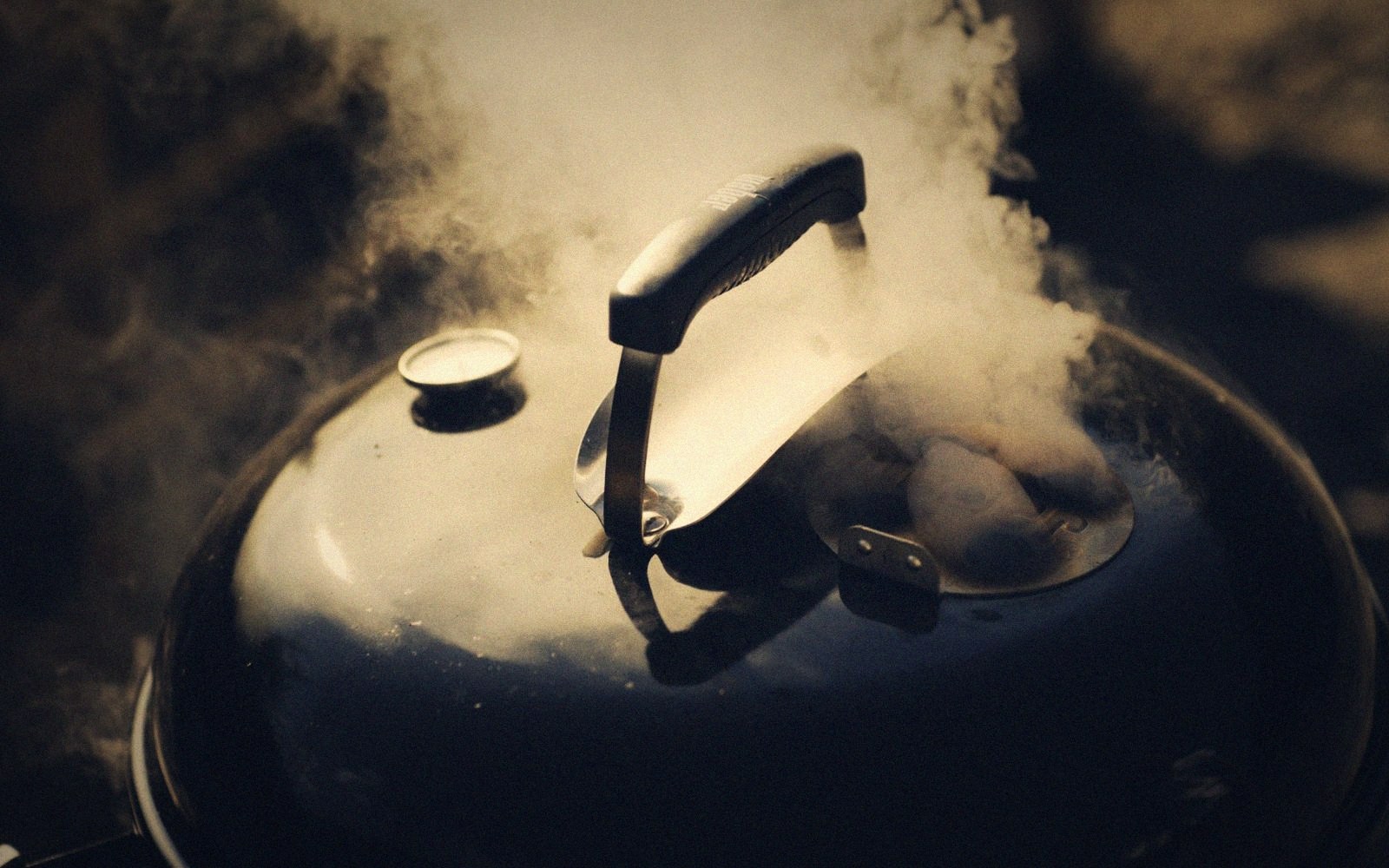
What the hand test does that a thermometer cannot is integrate. It reads the combined output of convective heat rising from the coals and radiant heat coming off their surface, at the plane where food actually cooks. It also forces you to assess the whole bed rather than the single point where a probe is sitting.
03Why the Thermometer Lies at Grate Height
A probe thermometer at grate height measures air temperature — specifically, the temperature of moving air at one location above a bed that is neither uniform nor static. The reading is real, but its usefulness is limited in ways that matter.
First, air temperature and radiant surface temperature are not the same thing. A glowing charcoal bed radiates heat directly at whatever faces it regardless of what the air in between is doing; that is the mechanism that browns food. Air temperature at grate height captures only part of what is cooking your food.
Second, a single probe point misses the variation that is actually shaping the cook. A bed with a hot core and cooler edges — which is most beds — will give you a confident number that applies to roughly one spot. Move the food six inches and the number is wrong.
Third, by the time you have taken a thermometer reading, repositioned the probe, and read it again, you could have run your hand across the whole grate and understood the landscape of the fire. The thermometer is not useless; it earns its place monitoring the ambient temperature inside a closed lid during a long indirect cook. At grate level, reading a live coal bed, it gives you false confidence in a precise number where the real skill is learning to read an imprecise, living system.
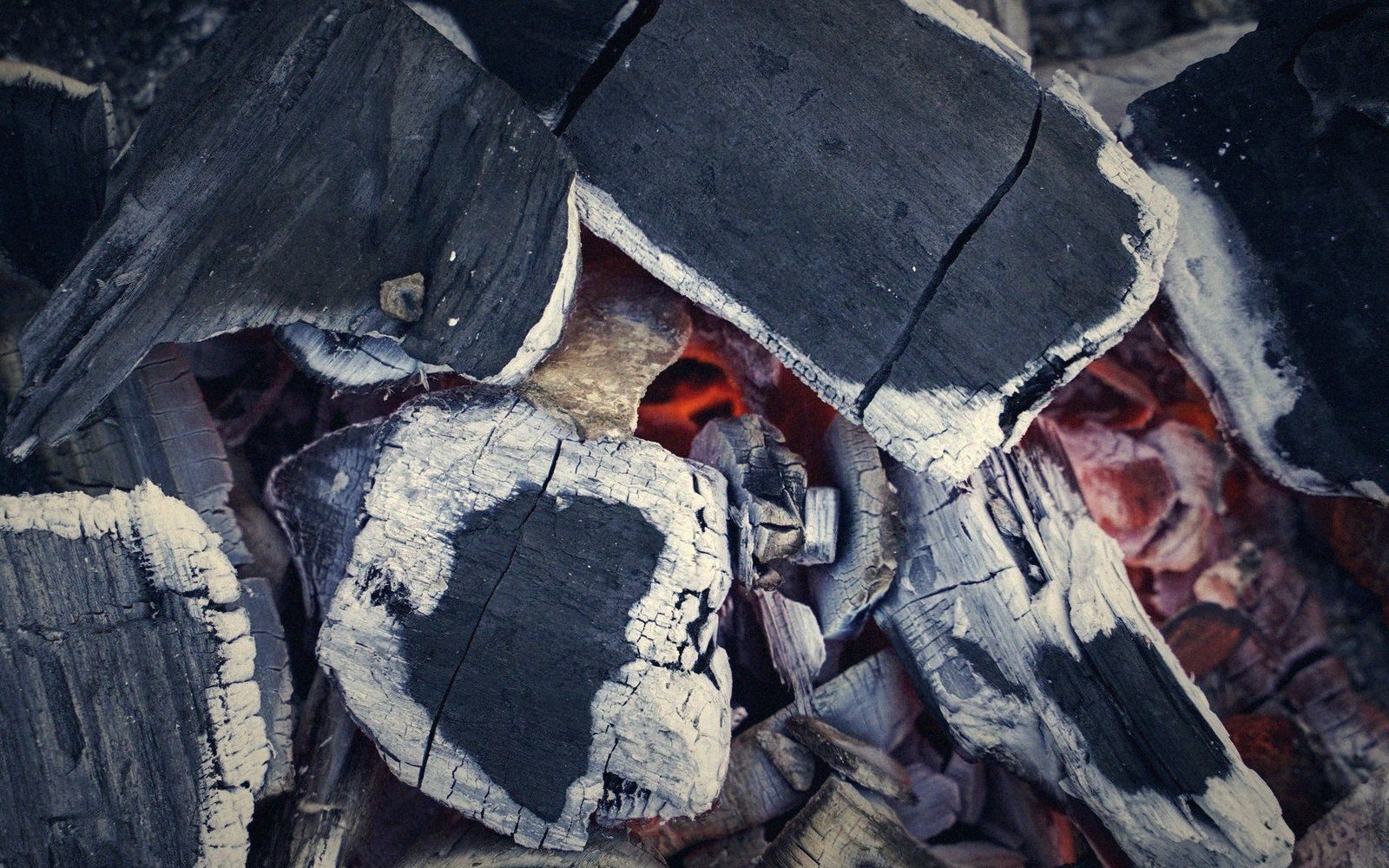
black unlit patches, orange-glowing grey-white centre, and heavy white ash at one edge
Photo: Vilnis Husko / Pexels
A charcoal fire is not a dial. It is a condition. The grey ash, the glow underneath it, the two seconds before your hand moves — that is the instrument panel.
Read with this
Entries the register ties to this one.