Pressing costs everything
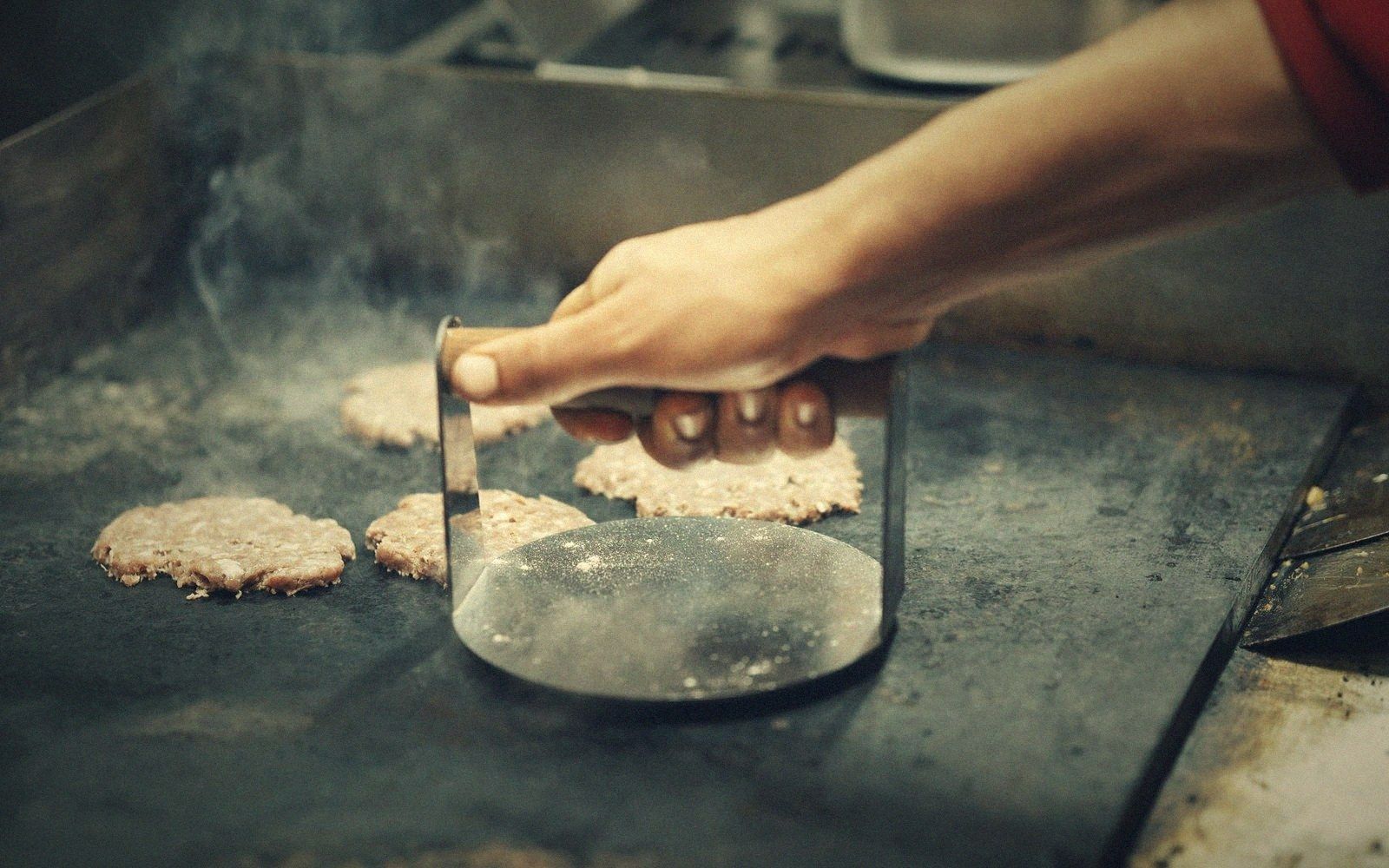
The instinct to press a burger is almost universal. It is also the fastest way to ruin one.
Rendered fat: liquefied intramuscular fat that drips into the fire instead of staying in the meat
Photo: Reza Tavakoli / Pexels
01What the press actually does
A burger sitting over coals is rendering. The fat inside the patty is liquefying slowly, basting the meat from within, keeping the interior moist while the surface browns. The moment you press down with a spatula, that liquid fat — the flavour, the moisture, the thing doing the work — squirts out of the patty and drops into the fire. It is gone. What flares up below the grate is not drama; it is your burger leaving.
The structural damage compounds the loss. Pressing compacts the meat, collapsing the loose, open texture that good grinding and gentle forming preserve. The proteins are forced closer together, the interior dries faster, and the resulting burger eats dense and tight rather than open and yielding. You have simultaneously emptied the fat and ruined the grain — two failures for one impatient gesture.
Every press is rendered fat in the coals instead of in the meat.
There is a related myth: that pressing a burger makes a better sear. It does not. Brief, firm contact between meat and a hot grate is what builds a crust, and that contact is already happening without help. Pressing harder does not increase the Maillard reaction; it just accelerates moisture loss and sticks the patty more firmly to the bars. If your crust isn't forming, the surface is wet or the heat is wrong — pressing will fix neither.
The only legitimate use of a spatula before the flip is to check whether the patty releases cleanly from the grate. A burger releases when it is ready; forcing it before that moment tears the crust you have spent time building. After the flip, leave it alone again. The second side needs less time than the first and no interference.
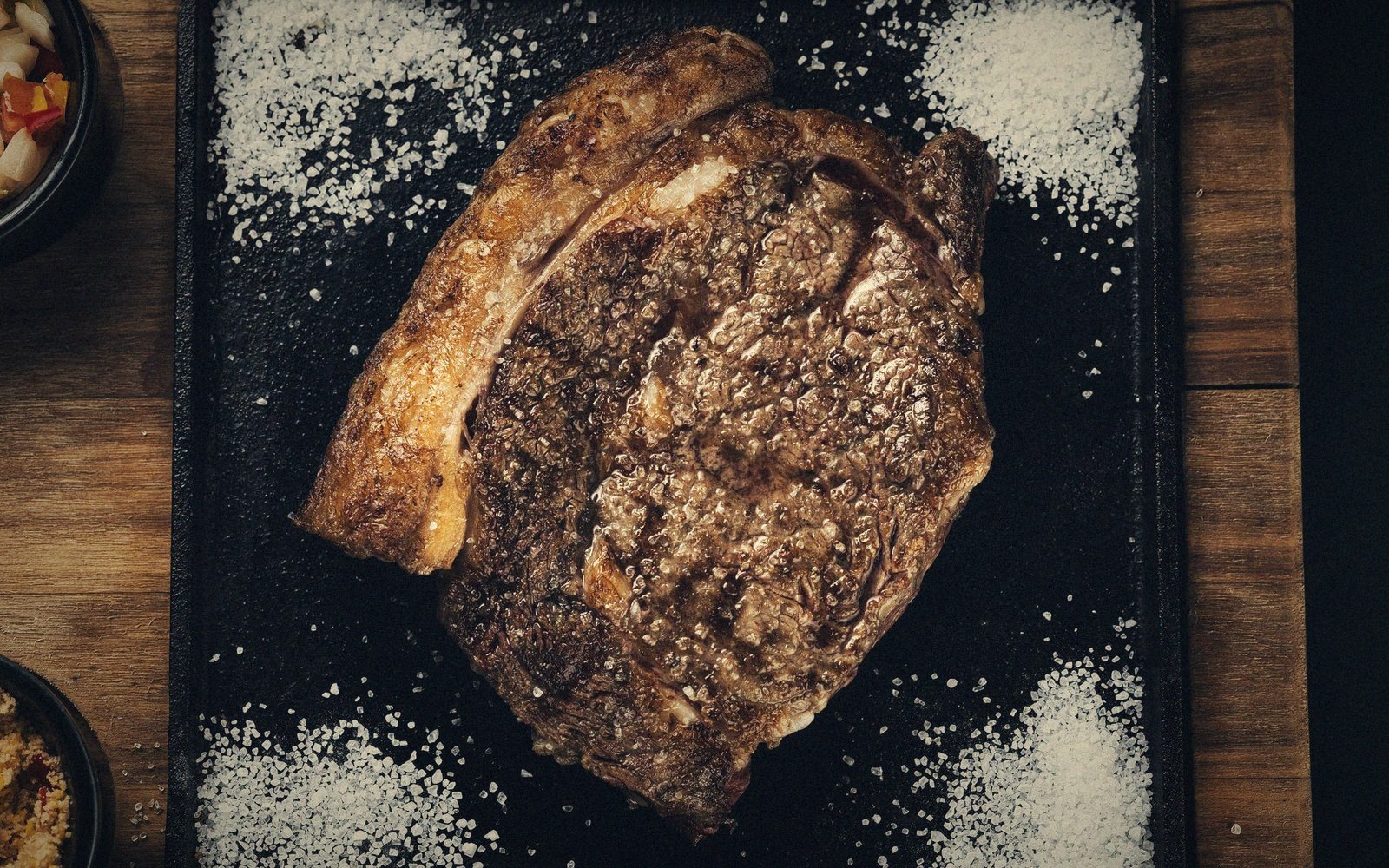
A patty formed loosely, placed on a clean, properly heated grate, and left to cook will outperform one pressed repeatedly — every time, by a margin that is not subtle. The cook who touches it least usually wins.
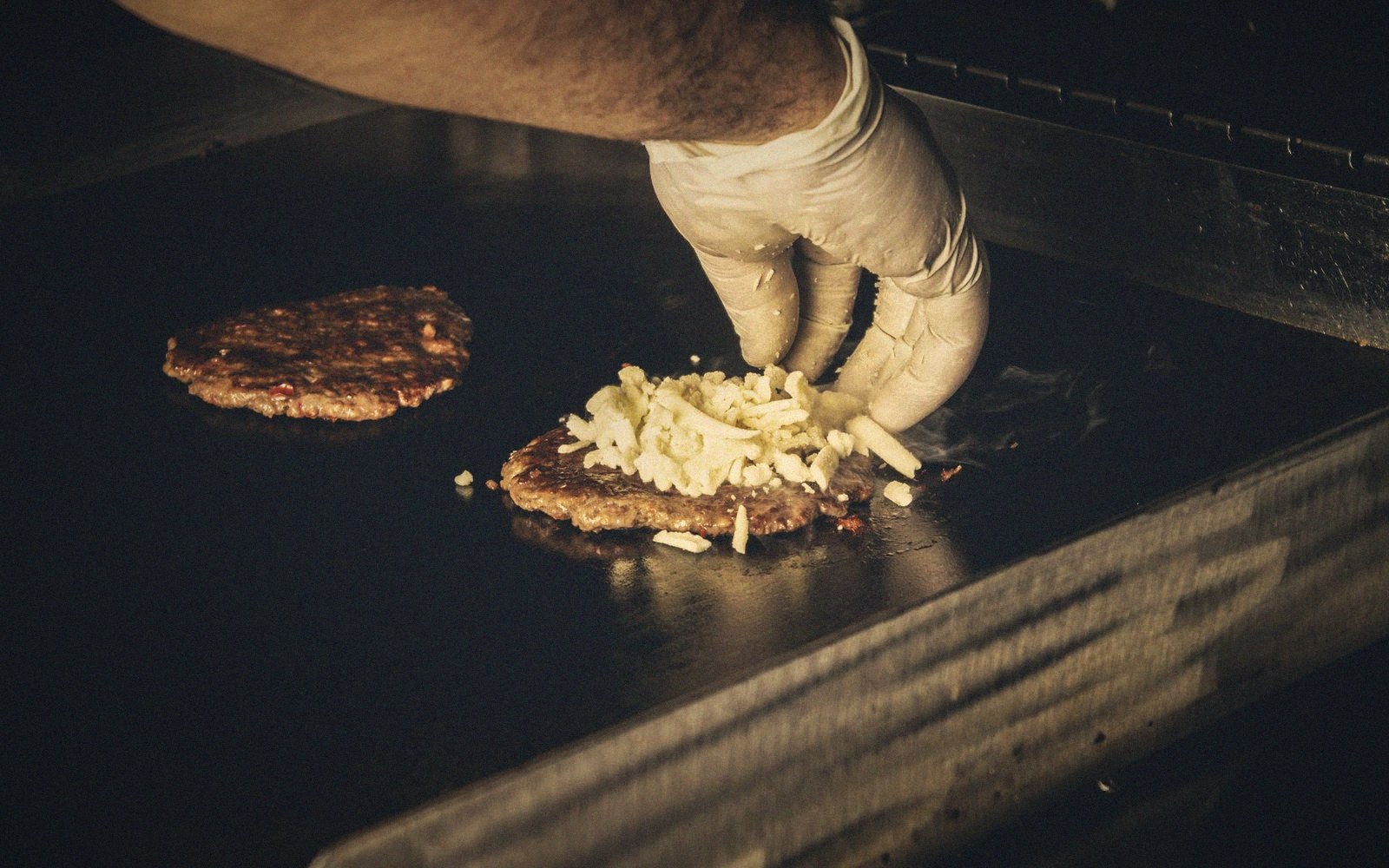
mid-article, illustrating where the flavour goes
Photo: Youssef Samuil / Pexels
Read with this
Entries the register ties to this one.