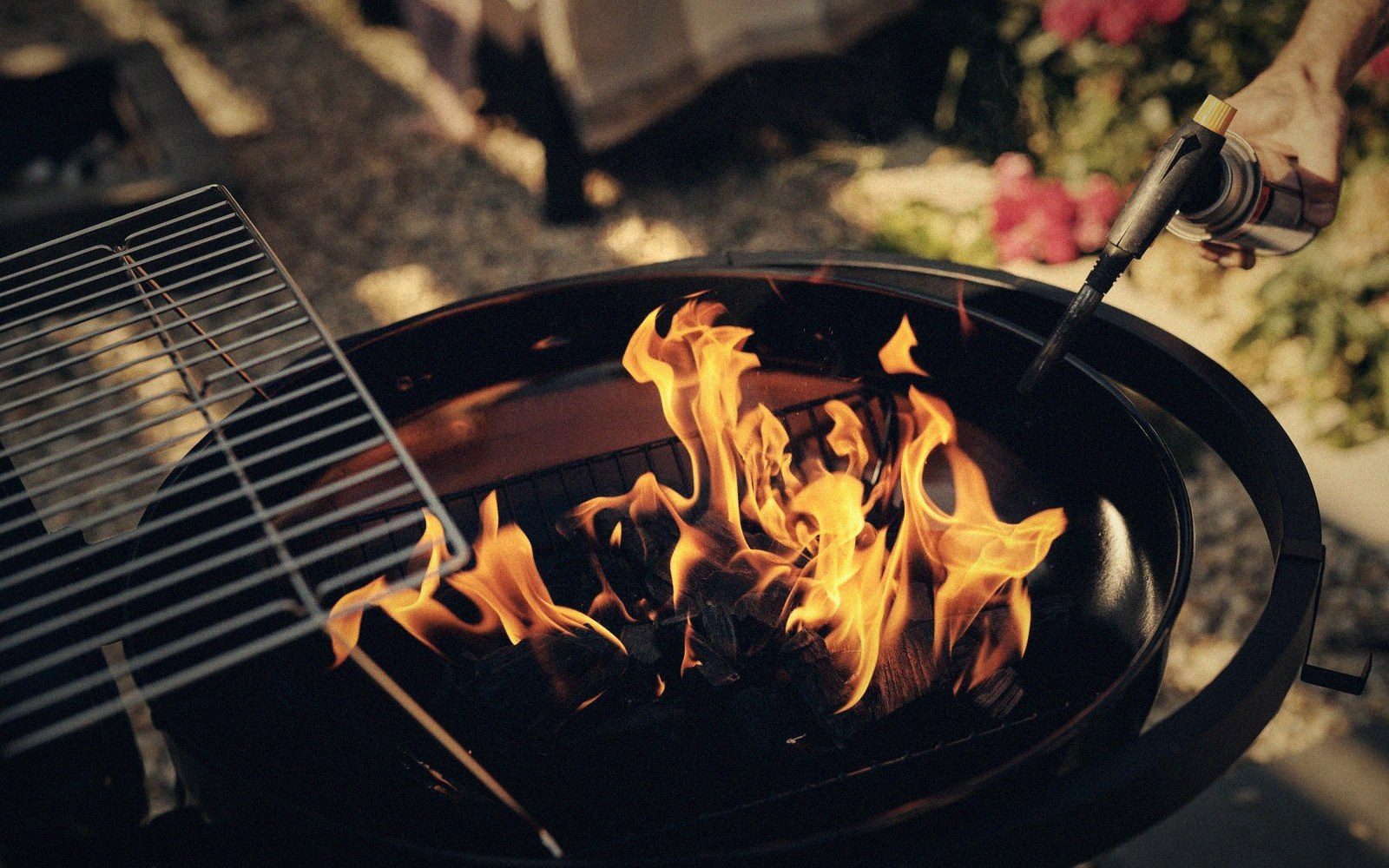
Direct heat: fuel below meat; radiation and conduction; fast, high surface temperatures
Photo: Askar Abayev / Pexels
01Why the arrangement matters
Direct heat is simple: fuel below, meat above, radiation and conduction doing the work fast. Indirect heat changes the geometry entirely. The fuel goes to one side — or both sides with a gap in the middle — and the meat sits over empty grate, away from the flames. Close the lid, and the setup stops being a grill and starts being a convection oven with a smoke source attached.
What moves the heat now is air. Hot gases rise from the coals, roll across the inside of the lid, and circulate back down around the meat. The food is surrounded rather than blasted. Surface temperatures stay lower, around the 120–160 °C range rather than the 230 °C or above you get directly over a coal bed, and the cook slows down accordingly. That slowness is the point.
The fire on one side, the meat on the other, and the lid doing the rest.
Connective tissue — collagen, the dense protein scaffold inside shoulders, briskets, short ribs — doesn't dissolve at high speed. It needs sustained internal temperature, ideally in the range of 85–95 °C, held long enough for the collagen to convert to gelatine. Rush it with direct heat and you get a tight, chewy interior behind a charred crust. Give it indirect heat over a long cook and the whole cut softens. The outside never chars, but it browns steadily through the same Maillard chemistry, just at a gentler pace.
02The mechanics of the setup
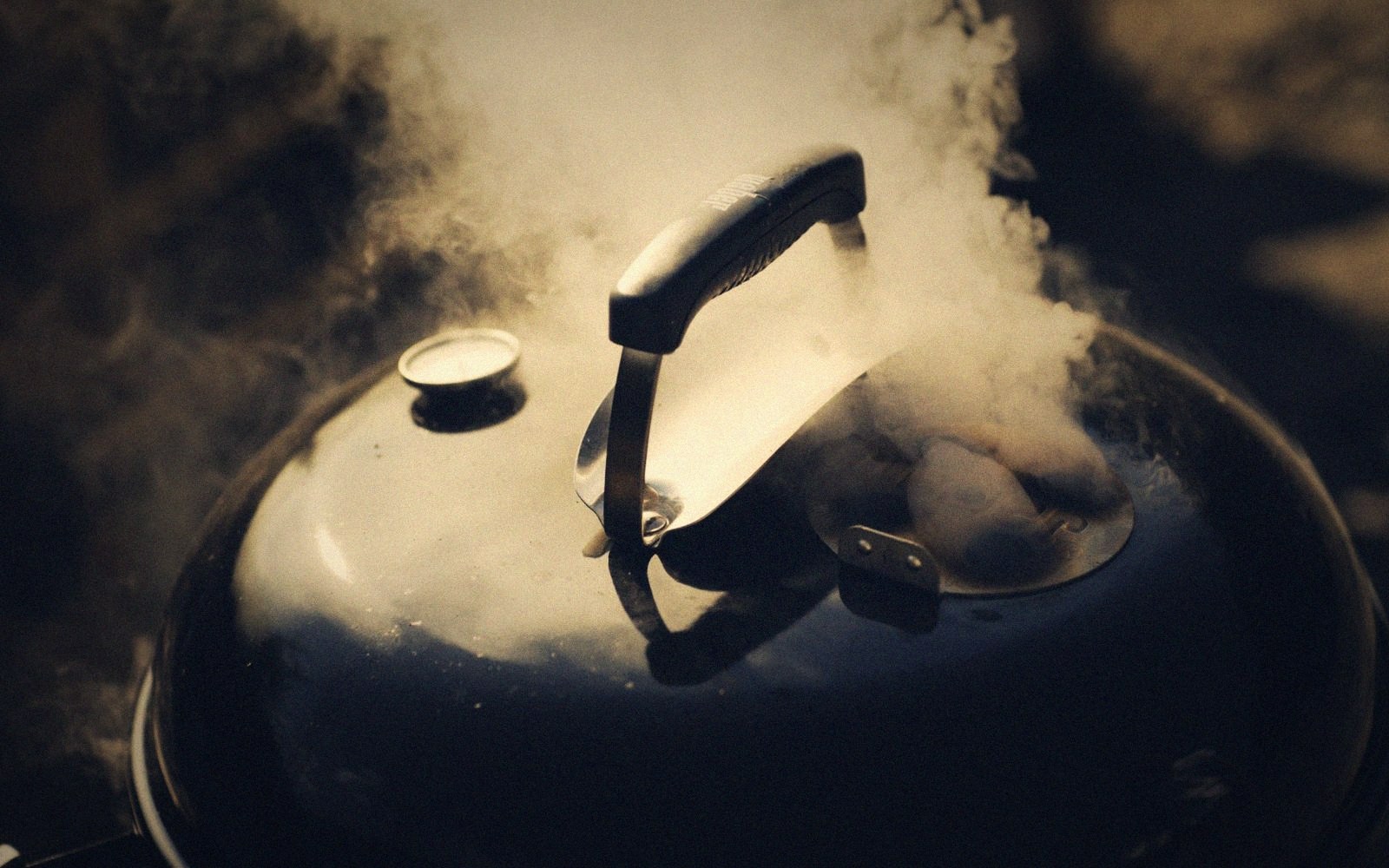
Bank the coals to one side and leave the other side of the grate clear. On a kettle grill, a tight bank against the wall works well; on an offset-style setup, the firebox does the same job structurally. The key in either case is keeping the lid on — without the lid, there is no oven, only a fire with meat sitting next to it.
Vent position matters more here than in a direct cook. The intake vent controls how fast the fuel burns; the exhaust vent, usually in the lid, controls how much heat stays inside and where the smoke exits. For a low indirect cook, both vents should be open enough to maintain combustion but restricted enough to hold the interior temperature down. Fully open vents mean a hotter, faster fire; close them too far and you smother it. The target is a stable internal temperature, and the vents are how you dial it.
The meat goes on the cold side, positioned so that the rising hot air must travel over it rather than directly hitting it. Orientation is worth thinking about: thicker parts of the cut toward the fire side, thinner ends pointing away, so the whole piece cooks more evenly. If you're working a large cut, rotate it halfway through — not to rush it, but to compensate for any uneven heat distribution across your rig.
03What the long cook actually does
Fat renders slowly and self-bastes the meat from the inside. The surface dries gradually and builds a bark — not a sear, but a firm, flavoured crust formed by prolonged evaporation and smoke deposition. Clean, thin smoke is essential here: a long cook gives smoke plenty of time to accumulate, and the difference between wood that has properly caught and wood that is smoldering badly will be legible in every bite.
Patience is the actual technique. The stall — the plateau where internal temperature seems to stop climbing — is a feature of the long indirect cook rather than a failure of the fire. Evaporative cooling off the meat's surface is holding the temperature down while collagen work continues underneath. The cook has not stalled; chemistry has taken over from physics and is doing something the thermometer can't easily read.
The fire on one side, the meat on the other, the lid holding the heat between them. Everything that makes a tough cut worth eating comes from that arrangement held steady for as long as it takes.
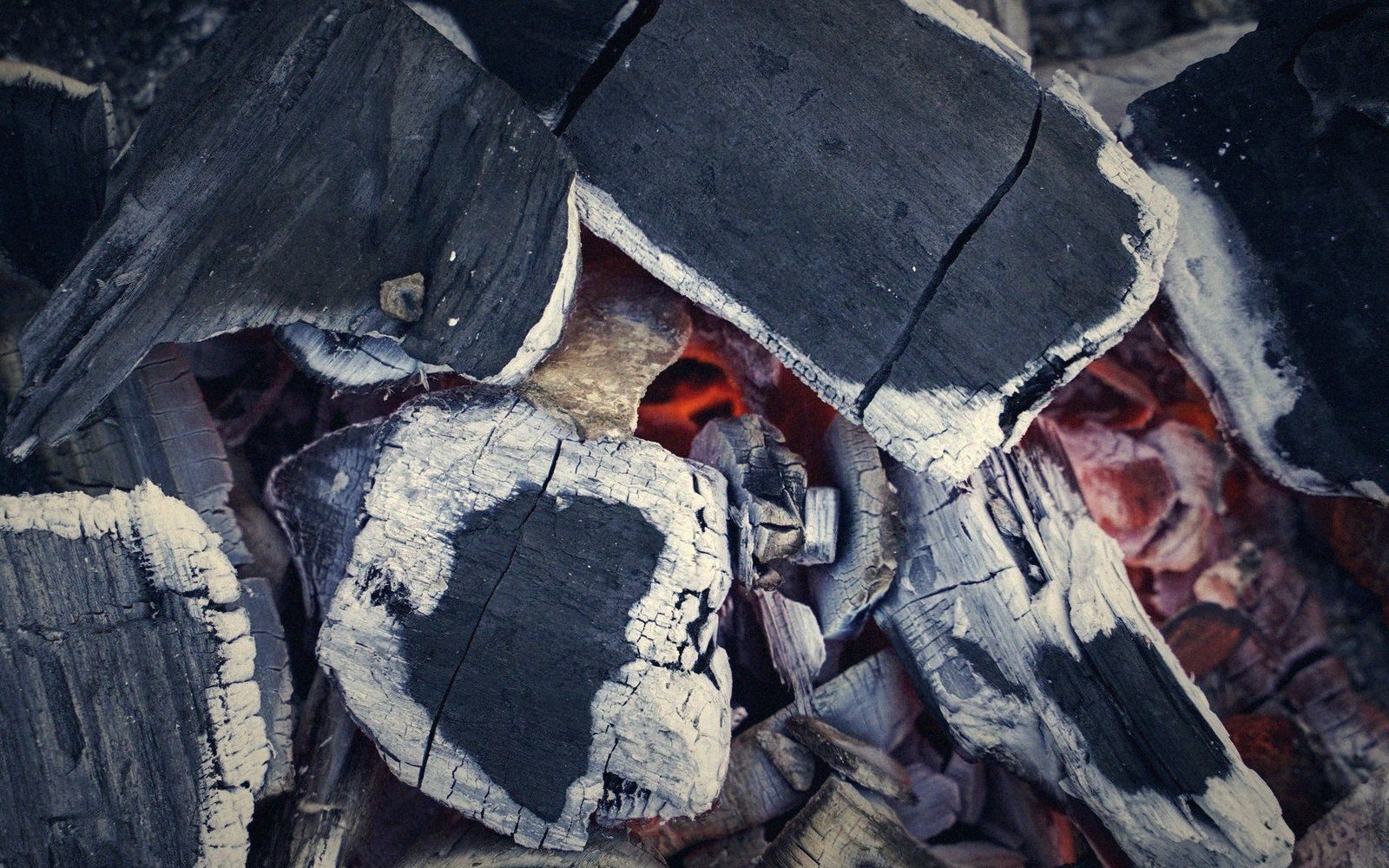
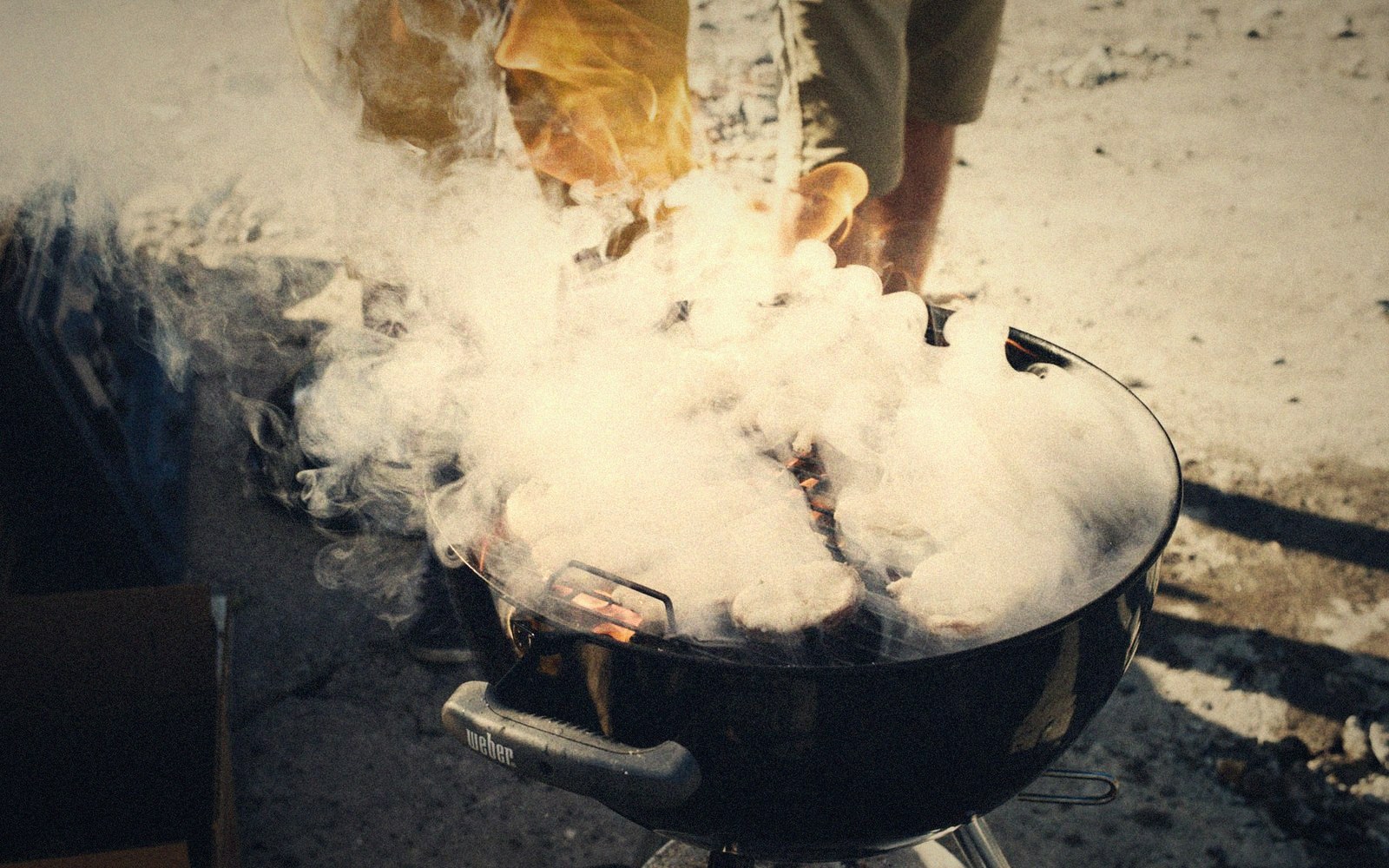
Mid-piece: a large cut (shoulder or brisket) resting on the cold side of a grate, lid just lifted to show the setup, smoke curling from the coal bank on the opposite side
Photo: Vilnis Husko / Pexels
Read with this
Entries the register ties to this one.