Grind and grain
The grind determines everything that happens before the patty ever meets heat — texture, density, how fat distributes, and whether the thing holds together or compacts into a disc of paste.
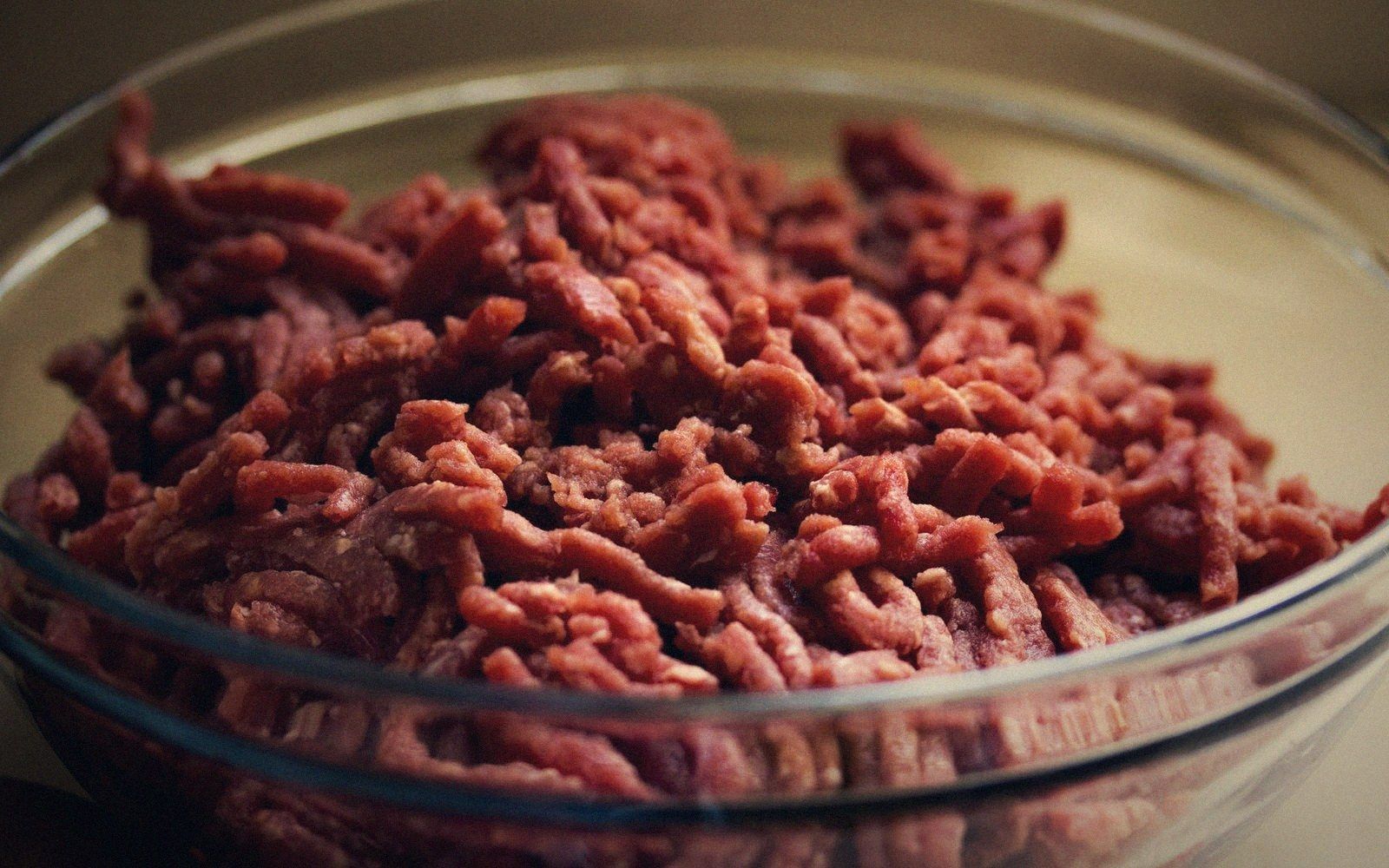
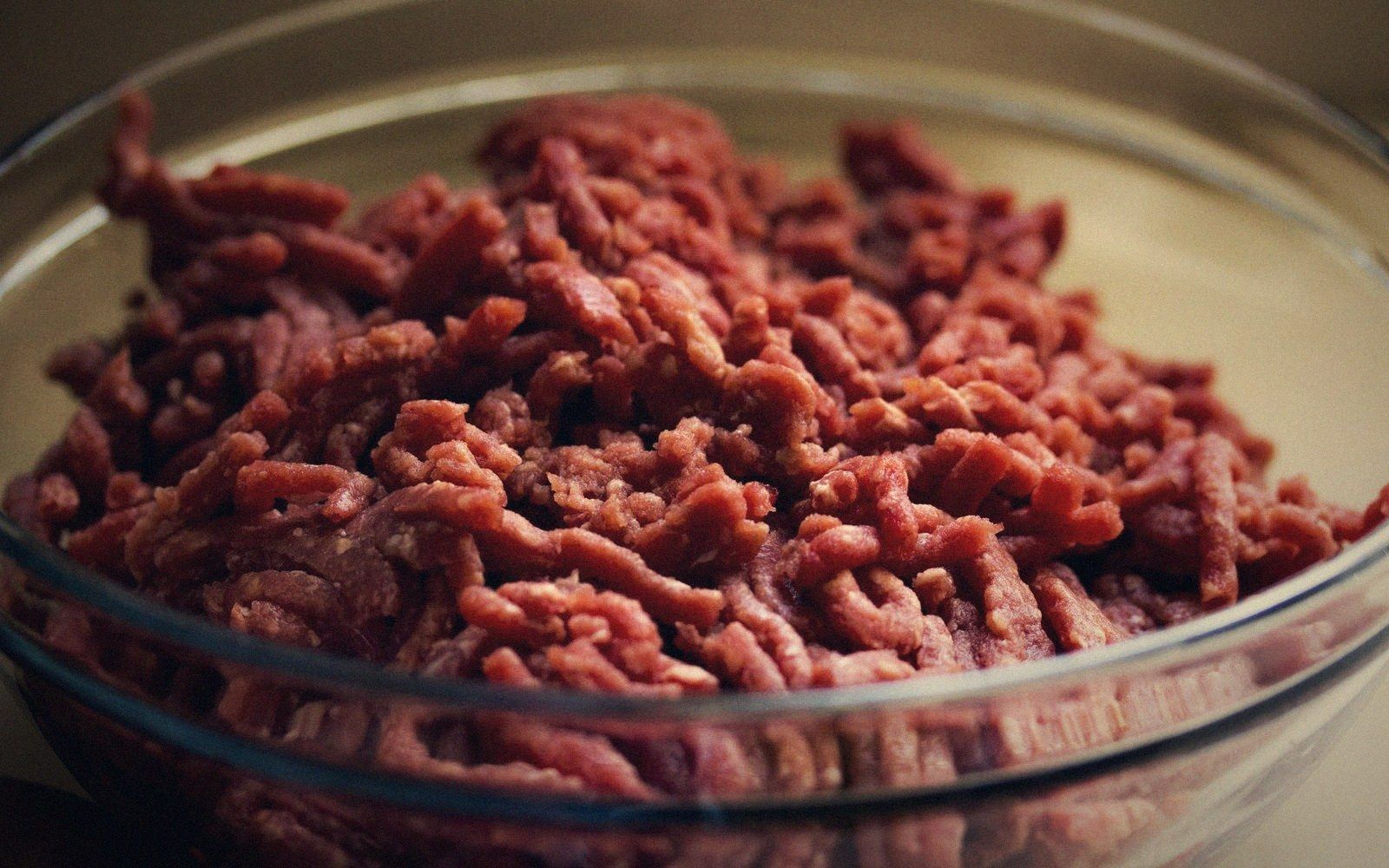
Coarse die (~¼ inch): leaves discrete muscle and fat pieces; more forgiving of handling pressure
Photo: Angele J / Pexels
01What the grinder is actually doing
Grinding is cutting, not crushing. A sharp plate and die system shears the muscle fibres and fat into discrete pieces; a dull one tears and smears, generating heat through friction that begins to denature surface proteins before the meat is even formed. That smearing is the enemy of open texture. It welds particles together at the cut face, and what comes out of the tube already behaves less like distinct pieces of meat and more like an early stage of emulsification. Grind it once more from that state and you have paste.
The plate hole diameter — the die — sets the coarseness. A coarse grind, typically around a quarter-inch die, leaves visible pieces of muscle and fat. Run the same meat through a fine die and the pieces are smaller, the surface area of cut faces multiplies, and the proteins exposed to one another are ready to bind on contact. Pressure — from your hands, from the weight of the patty, from a spatula — is all they need to fuse. Coarse grind forgives handling better. Fine grind amplifies every mistake.
Coarse holds texture, fine turns to paste, and the direction it packs matters.
Fat distribution matters alongside particle size. In a coarse grind, distinct fat pieces sit in pockets through the matrix. When those hit the fire, they render and move — lubricating the structure and basting from within. In a fine grind, fat is dispersed so thoroughly that it renders out more uniformly, often escaping the patty faster rather than pooling. The fat ratio that works changes slightly depending on grind: a coarse eighty-twenty has perceptibly more juicy chew than a fine eighty-twenty because the fat is doing different work.
02Grain direction and what it costs to ignore it
Grind creates a grain — an orientation of fibres and particles that comes from how the meat exits the die. Watch closely when the grind comes out: the strands arrange themselves more or less in the direction of travel, parallel to the long axis of the tube. Stack or fold that material randomly and the grain breaks up; compress it in line with itself and it packs denser along that axis.
This is why forming method is not decoration. If you take a handful of coarse-ground meat and press it straight down into a patty — squeezing in the direction the grind already runs — you are compacting along the grain and the patty eats closer to a meatball. Press laterally instead, shaping by pushing outward from the centre, and you disrupt the grain alignment, keep the structure open, and give the patty somewhere to push back from as it contracts on the grill. The internal texture under the crust will be noticeably looser.
Cold grind also holds its structure longer under forming pressure. Warm fat smears on contact; cold fat stays solid and behaves as a discrete particle until the fire takes it. Grinding into a bowl set over ice is not affectation — it preserves the exact texture the die creates all the way through to the finished form.
03The one-grind rule
Double-grinding is a technique, not an accident, and it has a use: an initial coarse pass followed by a fine pass creates a coherent, tight-structured patty that holds on the grill without any binder. Historically this is how certain formed patties were meant to work — the second pass knits the surface into a self-binding layer. The inside can stay relatively open if you chill between passes and handle it lightly.
But it is a choice, not a correction. Grinding twice because the texture looks wrong is solving the wrong problem. If the first grind is properly cold, sharp and not overworked, it does not need a second pass for a burger built for char and crust. Form it loosely, handle it once, and let the grind do what the grind does.
The rule underneath all of it: the grind fixes the ceiling on texture. No amount of technique on the grill recovers a paste. Get it right at the machine, keep it cold, form it with respect for the grain, and the fire has something worth working with.
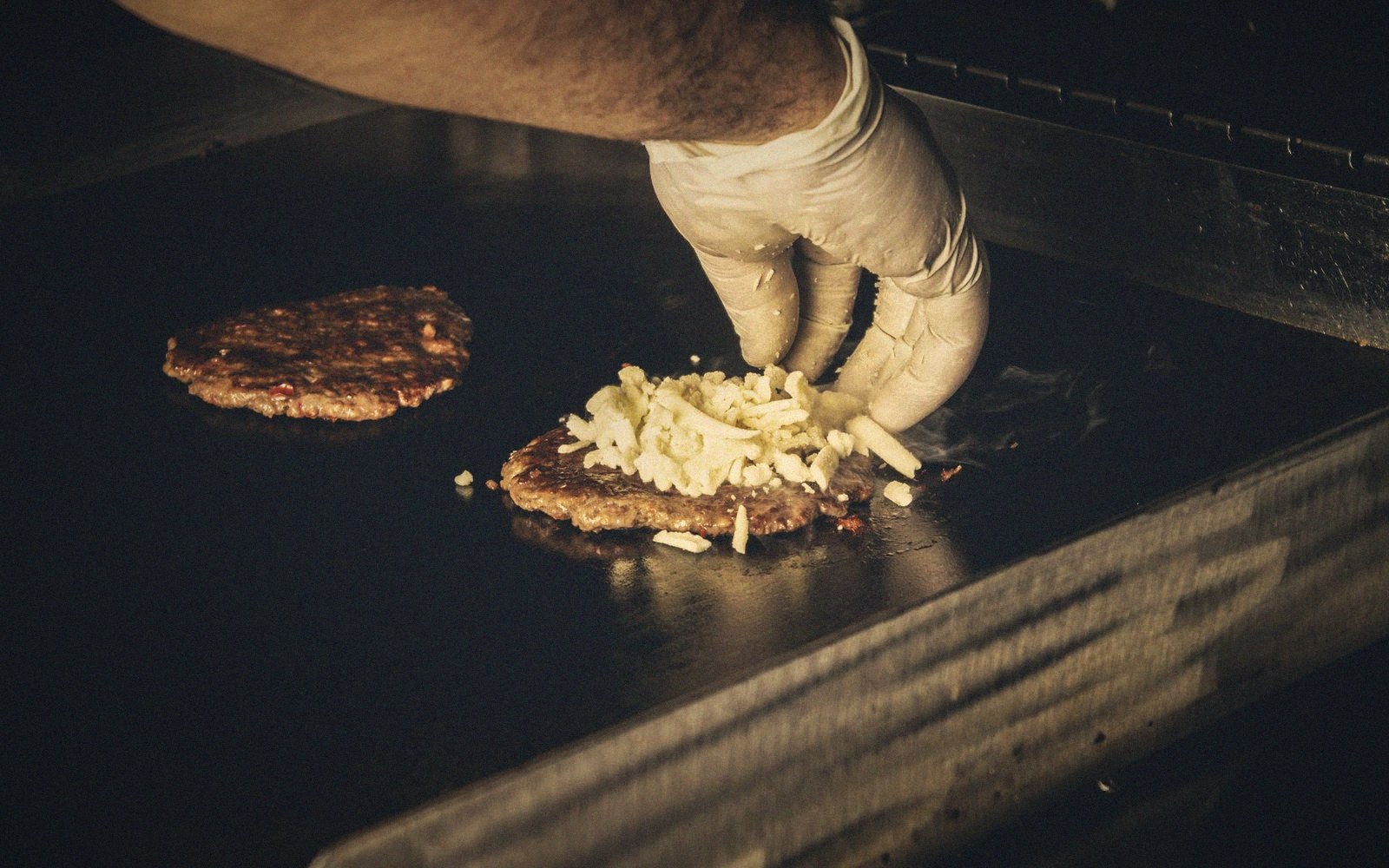
near the grain-direction section
Photo: Youssef Samuil / Pexels
Read with this
Entries the register ties to this one.