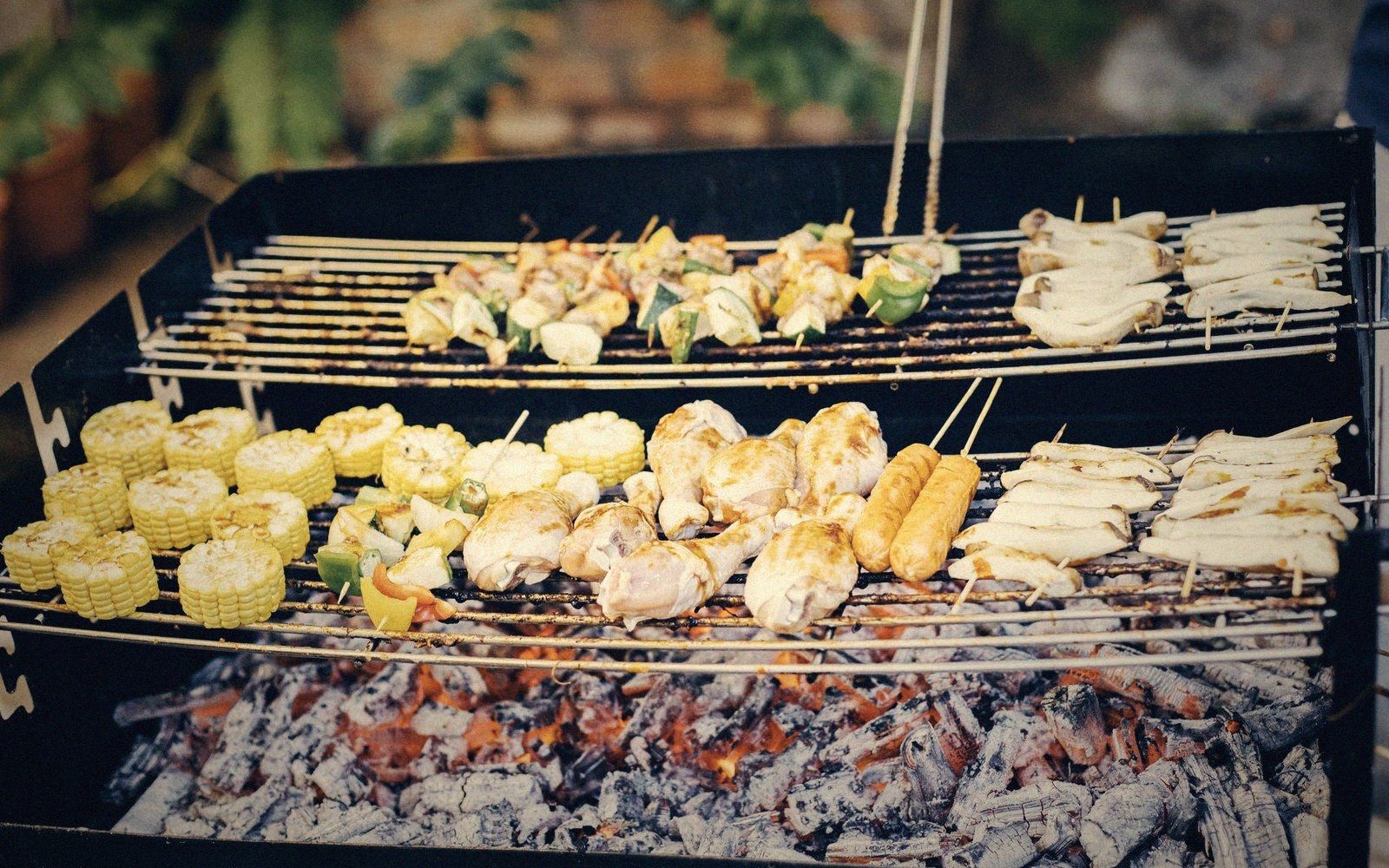
Inverse-square law: double the distance, intensity drops to roughly a quarter; halve it, intensity quadruples
Photo: Huỳnh Như Mavi / Pexels
01The geometry of a live fire
A charcoal bed is not a burner with a knob. Once the coals are lit and the vents are set, you have no way to turn the heat up or down the way a gas ring lets you — no infinite gradation between simmer and sear. What you do have is distance. The further the food sits from the source, the less radiant energy reaches it per second. Move it closer and you concentrate that energy. That relationship is not linear: halve the distance and the intensity roughly quadruples, following the inverse-square law. In practical terms, a centimetre or two is not a small adjustment.
Most grills offer only one grate height, so cooks learn to think of the coal bed itself as the variable — a thick deep bank for high heat, a thinner spread for moderate, raked out further for a longer gentler finish. But the grate position matters just as much, and on any setup where it can move, it is the most precise control you have over how quickly energy reaches the surface of the food.
Height above the coals is the only continuous control most fires have.
02Radiant heat, convective heat, and why the gap between matters
Heat travels from a coal bed by two routes at once. Radiation — the infrared emitted directly from glowing fuel — travels in straight lines and acts on whatever surface it can see, without needing to warm the air between. Convection is the hot air rising from the coals that flows around and over the food. At very close distances, radiation dominates and the effect is fast and fierce: surface temperature climbs quickly, crust forms, and the interior is barely affected while the outside chars. That intensity is useful for thin cuts and fish, where the whole piece cooks through at speed, but it is a liability for anything with depth, where you need more time for heat to migrate inward.
Move the grate further away and the radiant component drops sharply while convective heat becomes proportionally more important. The cook becomes more even, more forgiving. Indirect heat takes this further still — no coal directly below at all — but even over a direct bed, working the distance is how experienced cooks modulate the balance between crust development and interior doneness without moving the food off the fire entirely.
03Working the grate as an active tool
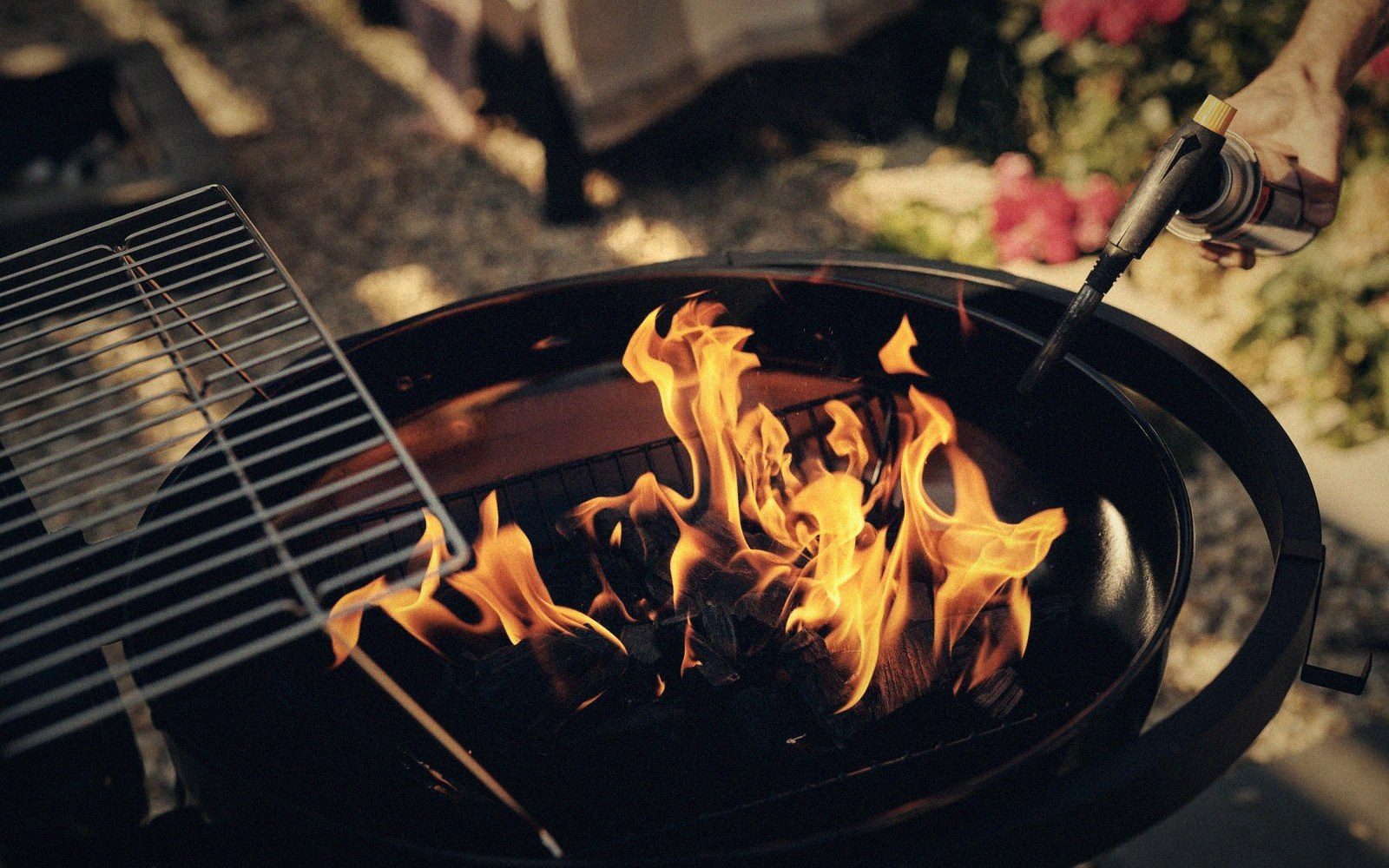
In practice, most live-fire cooks manage distance instinctively, using the hand test to gauge intensity at a given height and then deciding whether to sear now, back off, or hold. The value in understanding the underlying geometry is that it makes those decisions deliberate rather than reactive. You are not guessing; you are dialling.
A thick ribeye wants to start close — twenty seconds a side to begin crust formation — and then move to a cooler zone or a raised position to carry on cooking without the surface burning. A chicken thigh with the skin still on benefits from the opposite sequence: begin farther away so the subcutaneous fat renders slowly, then drop the grate or slide the piece to a hotter position at the end to crisp what's left. The sequence changes; the principle doesn't. Distance is the control surface.
Even when the grate is fixed, the same logic applies. Pile coals high under the spot where you want ferocious heat. Spread them thin and wide where you want a slow, holding environment. The effective distance between fuel and food changes with bed depth — a deep pile radiates from a surface that is physically closer to the grate than a shallow one. That's the two-zone fire stated in thermal terms: two different distances, two different temperatures, one bed.
What this means for every cook is that the questions worth asking before you put anything on the grate are not just how long and when to turn, but how close. Get that right and the rest of the variables — timing, doneness, crust — become easier to manage. Get it wrong and no technique rescues you. The dial was there; you just didn't reach for it.
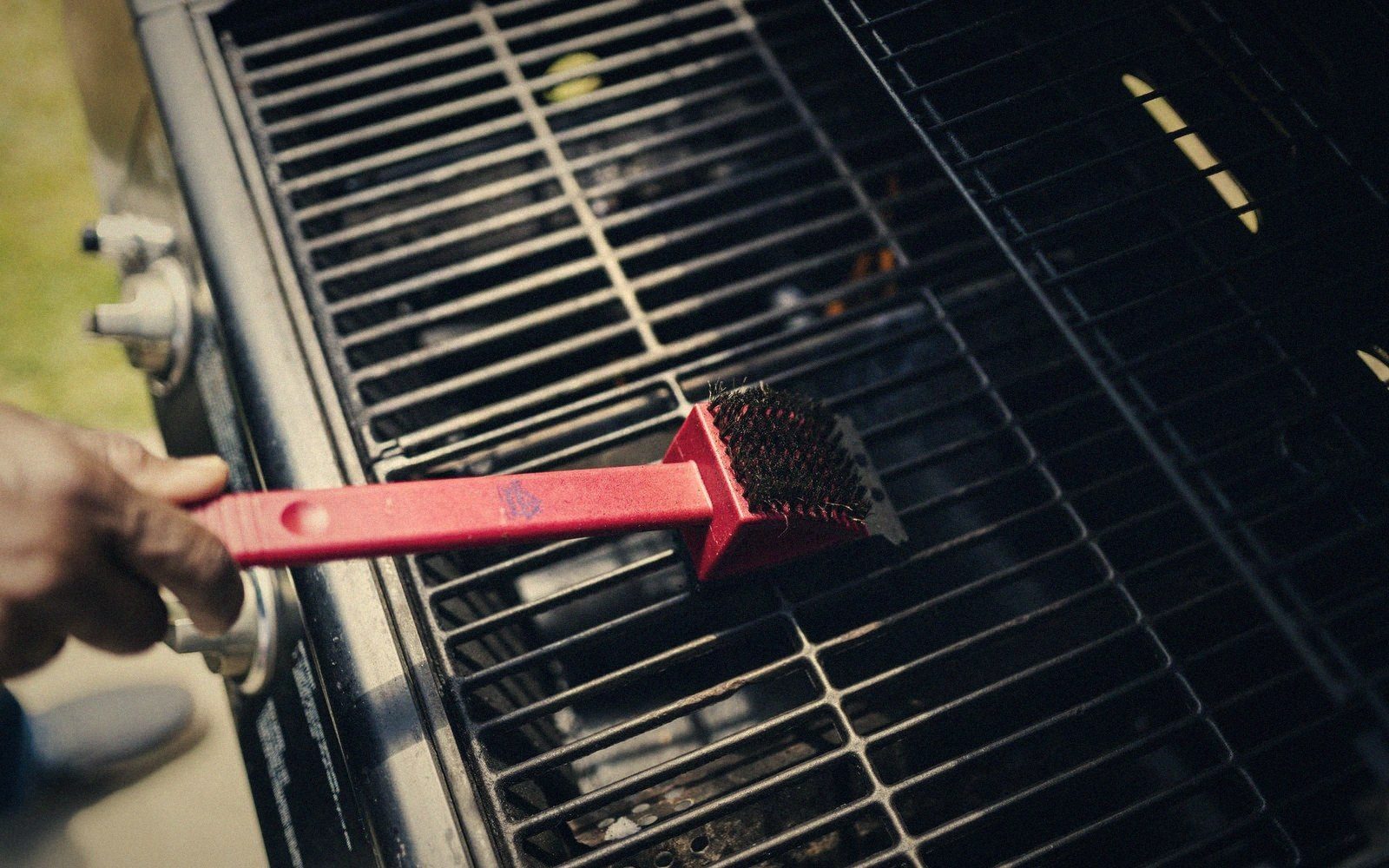
Bed depth changes the effective distance between fuel and food
Photo: RDNE Stock project / Pexels
Read with this
Entries the register ties to this one.