Charcoal against gas
The fuel shapes the heat — and the heat shapes every decision you make at the grate.
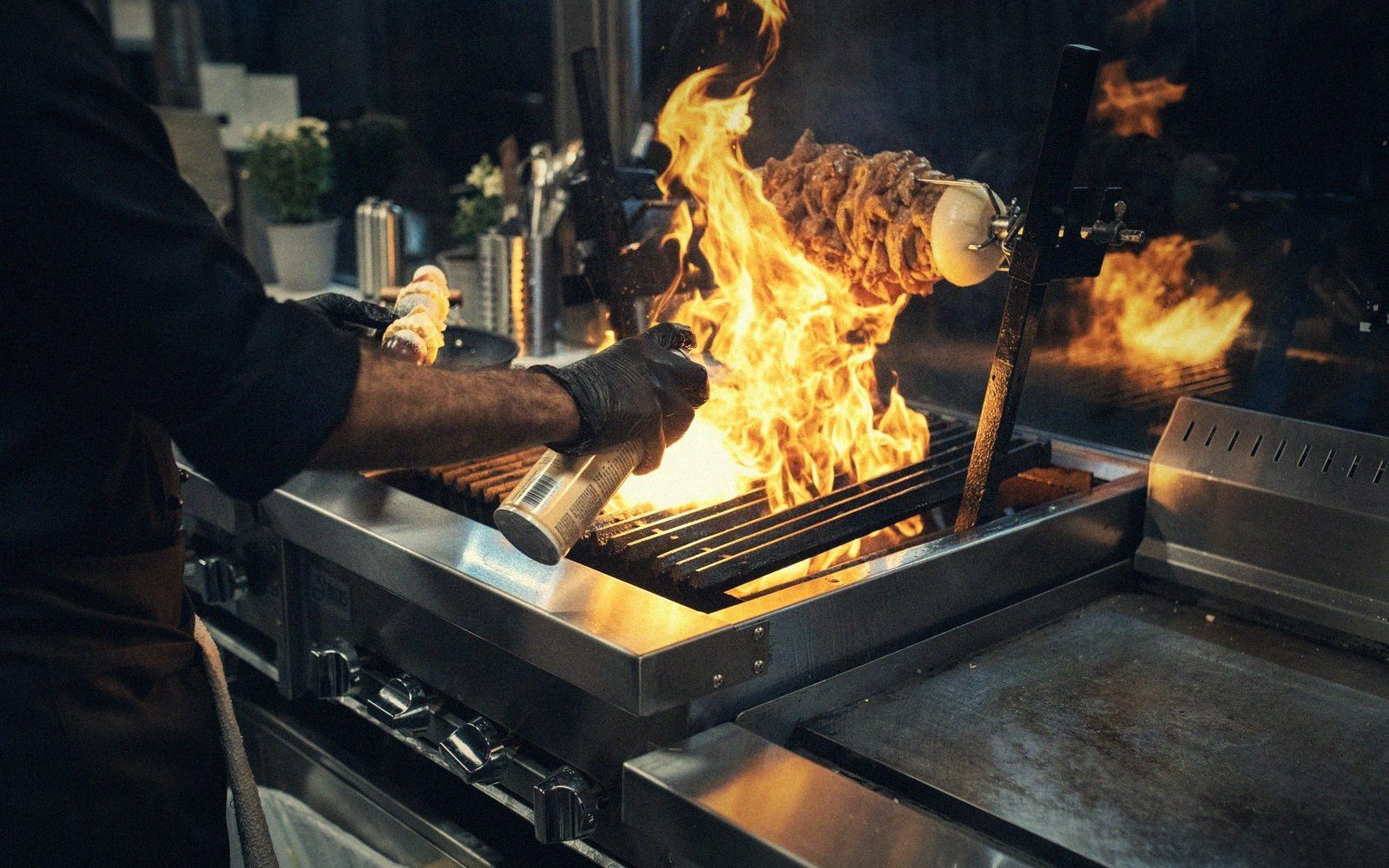
Radiant heat: electromagnetic energy travelling in straight lines from the ember surface; direct, intense, directional
Photo: RDNE Stock project / Pexels
01Two different fires
A gas burner heats by convection. The flame warms the air directly above it; that warm air rises through the grate bars and around the food. It is even, adjustable, and almost instantly controllable. The burner does not care whether the grate is hot or cold, whether the lid is up or down, or whether the food is directly above it or off to one side — it simply goes on producing warm gas until you turn the knob.
Glowing charcoal works differently. The majority of its energy arrives as radiant heat: electromagnetic waves travelling in straight lines from the ember surface to whatever sits above it. That radiation is intense and directional — it does not warm the air first, it strikes the grate bars and the underside of the food directly. The bars get very hot. The surface facing the coals sears. The surface facing away stays cooler for longer, which means that on anything thin — a skirt steak, a burger patty, a fish fillet — the differential between top and bottom is significant and real, and it drives how you cook.
Radiant heat from glowing solid fuel behaves differently from a burner, and the gap shows most on anything thin.
This is why the single-turn logic exists at all. On a gas grill the convective environment is working on all sides from the start; holding position is less critical. Over coals you are managing a directional beam, and repositioning the food interrupts it. The crust forms because the ember radiation is sustained and unbroken against one surface. Flip it once, rebuild the crust on the other side. Move it repeatedly and you are chasing a moving target while allowing the surface to cool and steam in between.
02Where the gap shows
Put a thin steak over a gas burner and over a properly loaded charcoal bed simultaneously, and the charcoal version will develop a darker, tighter crust at equivalent core temperatures. Not because the charcoal fire is hotter in an absolute sense — a gas burner can run very hot — but because the radiation hits the surface differently than convected heat does. Radiant energy drives surface drying and the Maillard reaction faster than an equivalent air temperature would, simply because it is depositing energy directly into the meat's surface rather than working through the air around it.
On thicker cuts the difference narrows, because you are cooking low and slow, mostly indirectly, and the mechanism matters less. Where charcoal earns its character most clearly is on anything that spends only a few minutes over the fire: thin cuts, vegetables, anything where surface development and core temperature arrive close together in time. The radiant beam does that work quickly; convected air takes longer.
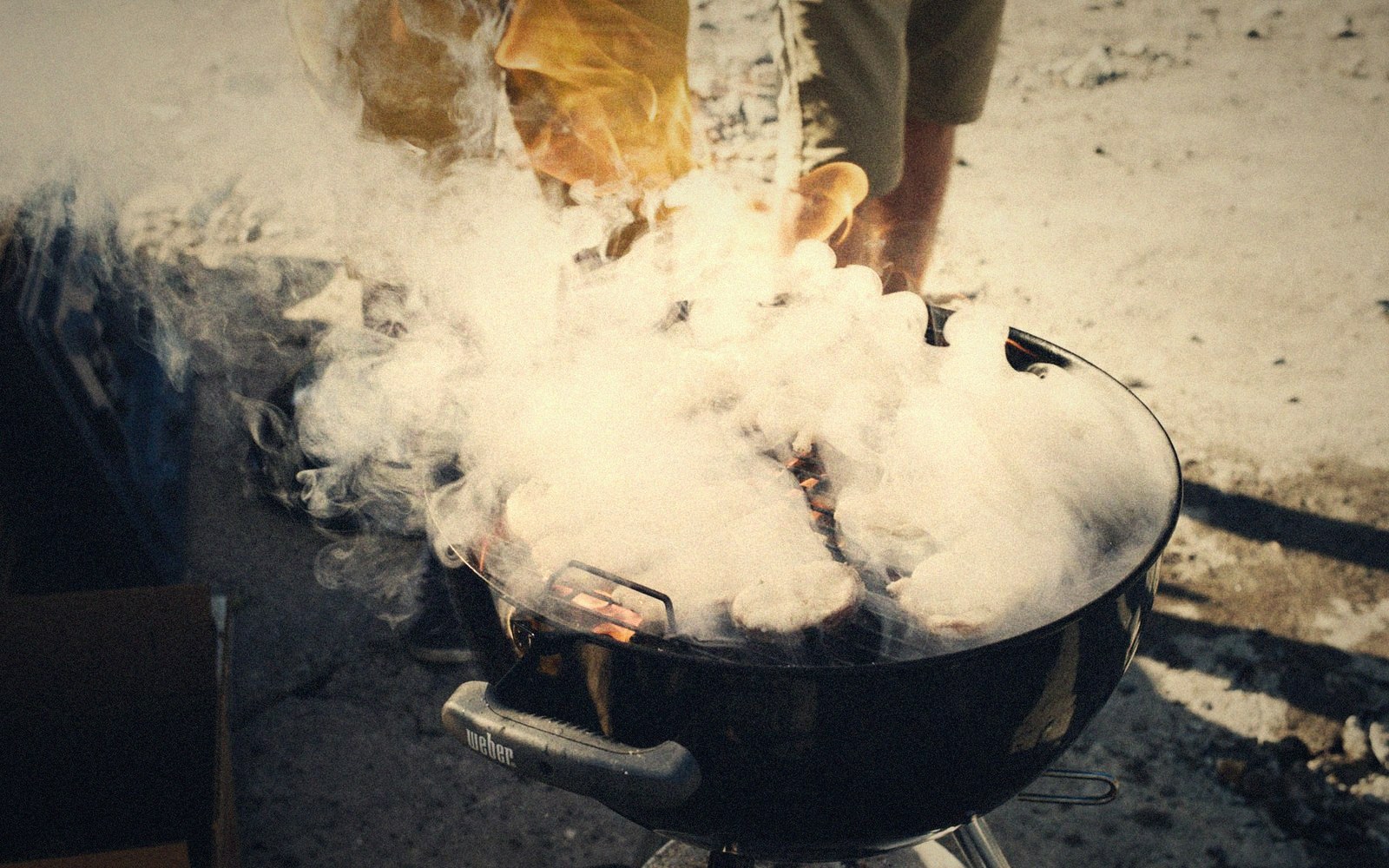
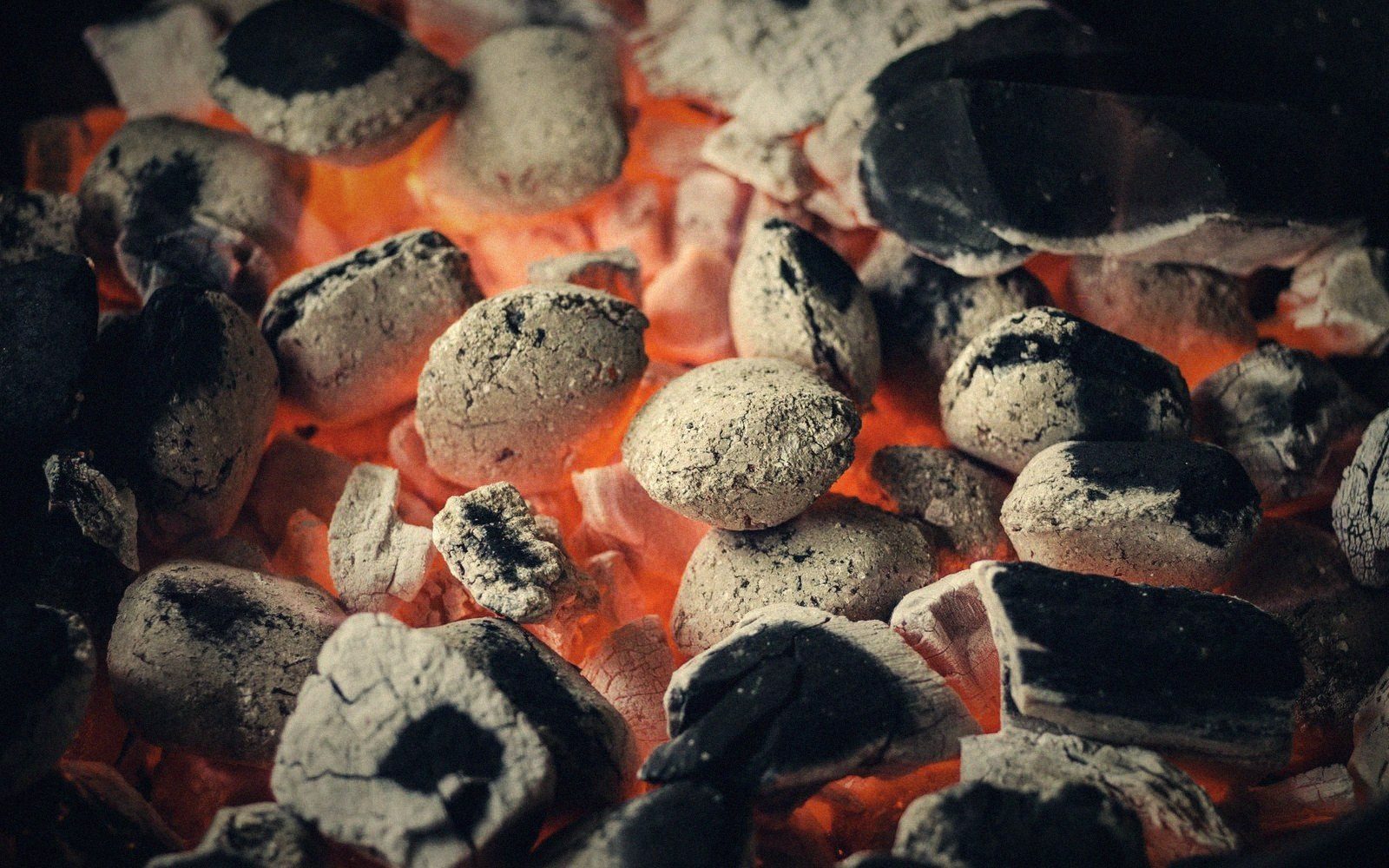
There is also the flavour dimension. Charcoal's radiant heat causes fat and juice that drips from the food to hit the ember surface, combust briefly, and rise back up as volatilised aromatic compounds — the source of what most people recognise as a grilled flavour. A gas burner produces some of this if the fat catches flame on the burner guards, but the chemistry is different and the yield is lower. The smoke fraction matters here too: a charcoal bed that has been brought to proper temperature — mostly ashed over, minimal unburnt volatiles — produces clean, thin smoke that seasons the food. Smoke is an ingredient worth managing, not just accepting as background.
Gas also loses its case entirely on anything that benefits from the embers themselves. A chunk of hardwood laid directly on a charcoal bed — not the charcoal, the supplementary wood — smoulders and steams in a way a gas grill cannot replicate without a dedicated smoker box, and even then the effect is attenuated.
None of this makes gas wrong. Controllability is real, and repeatability is real. But the mechanism — directional radiant heat versus convective warmth — is not a detail. It determines how the surface forms, how the fat interacts with the fire, and how much of the flavour arrives before the food leaves the grate. Understanding the physics means you work with the fire rather than fighting it: you manage the distance from the coals, you turn once, and you let the radiation do the thing it is actually for.
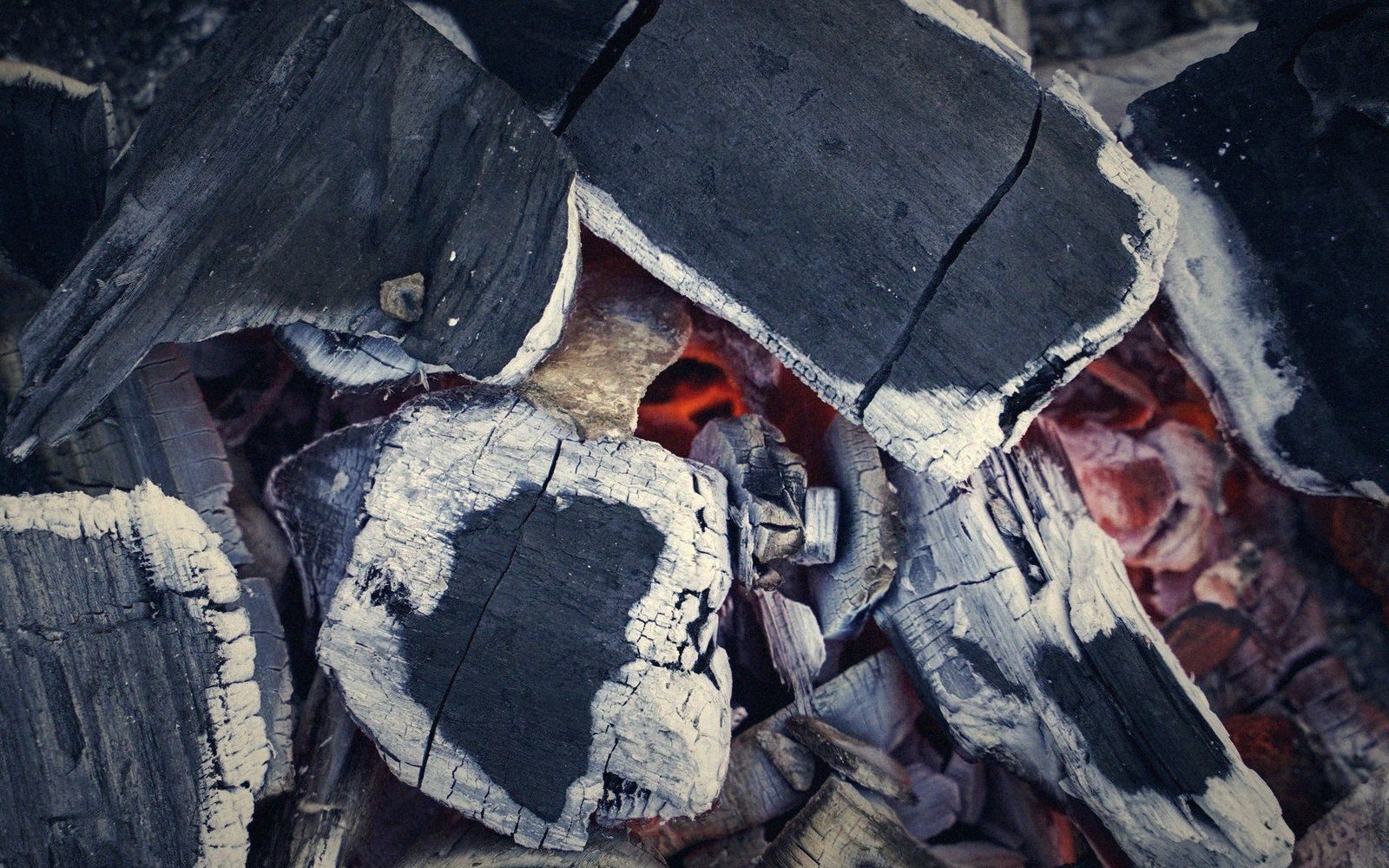
Photo: Vilnis Husko / Pexels
Read with this
Entries the register ties to this one.