Bars and marks
Those dark lines on your steak are the least of what a good grate can do.
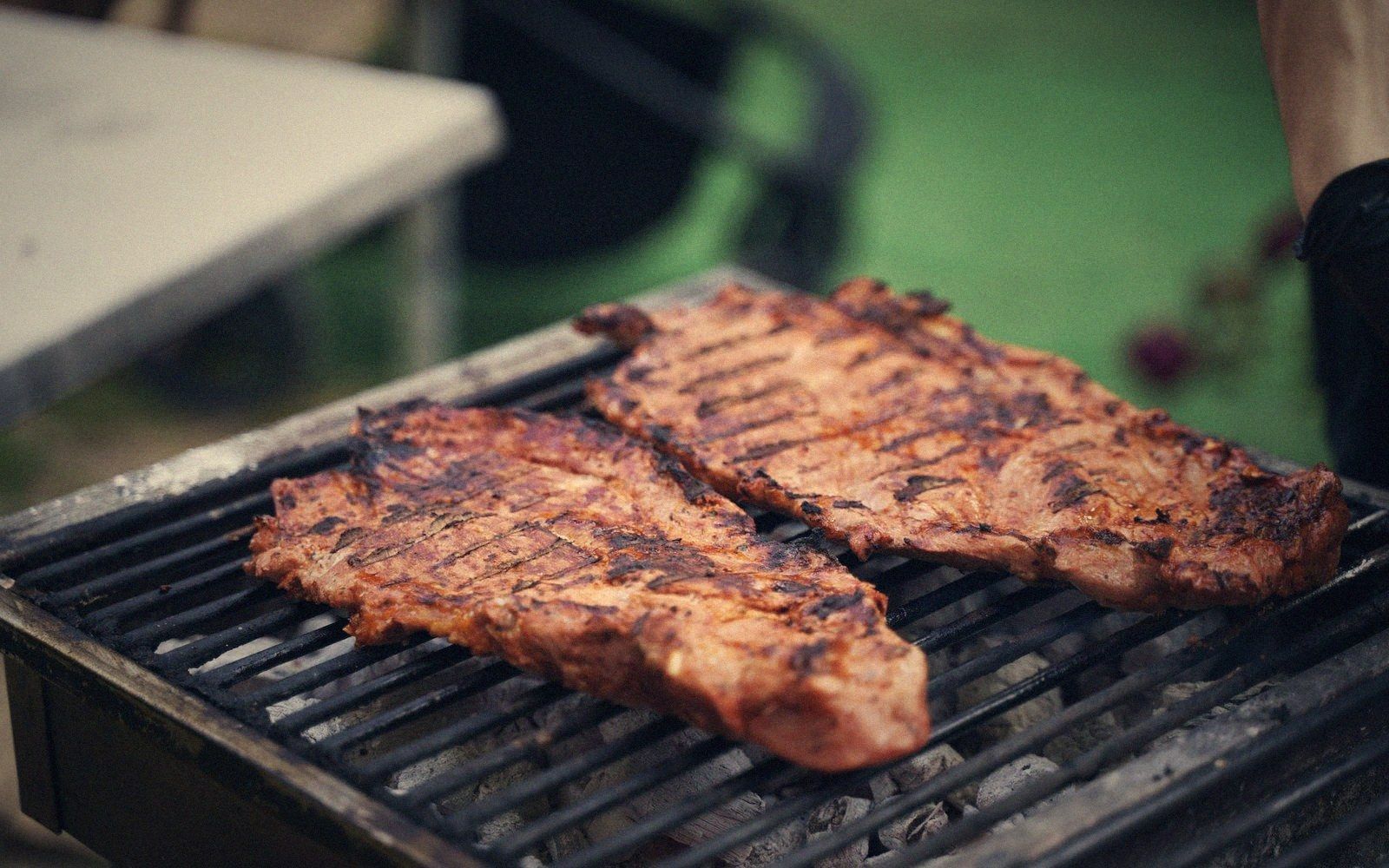
Contact area on a standard round-rod bar grate: roughly one-quarter to one-third of the food's surface
Photo: Boris Ivas / Pexels
01The geometry of contact
A grill mark is proof of contact — which means it is also proof of absence. Every pale strip between the marks is a gap, a place where the meat hung above the coals with nothing touching it. On a standard round-rod grate, contact covers somewhere between a quarter and a third of the surface; the rest is open air. That is not a flaw in your technique. It is the geometry of parallel bars, and it matters more than most people think about.
The mark itself forms the same way a crust does anywhere: the surface dries, the Maillard reaction fires, proteins and sugars reorganise into something brown and complex and distinctly not raw. Where the bar presses, you get that. Where the bar is absent, you get something gentler — radiant heat from the coals, convective warmth from moving air, none of it as fierce or as direct. The surface browning needs dry surface and sustained contact heat, and open gaps deliver neither.
Grill marks are contact points, which means most of the surface is not touching.
This is why crosshatch marks — rotating the meat 45 or 90 degrees partway through — are less about aesthetics than about coverage. A second set of contact lines doubles the area of direct conduction, reducing the unbranded pale strips. You still will not sear the whole surface on a bar grate, but you sear more of it.
The practical consequence is that a flat, heavy cooking surface — a cast-iron plancha, a solid griddle — produces fuller, more even browning across the whole face of the meat. No gaps, no pale strips, genuine crust wall to wall. Bar grates trade that coverage for something else: they allow fat to drip, airflow to circulate beneath the food, and a degree of open-flame character that a solid surface can never give you. The bars are a design choice with real costs and real benefits.
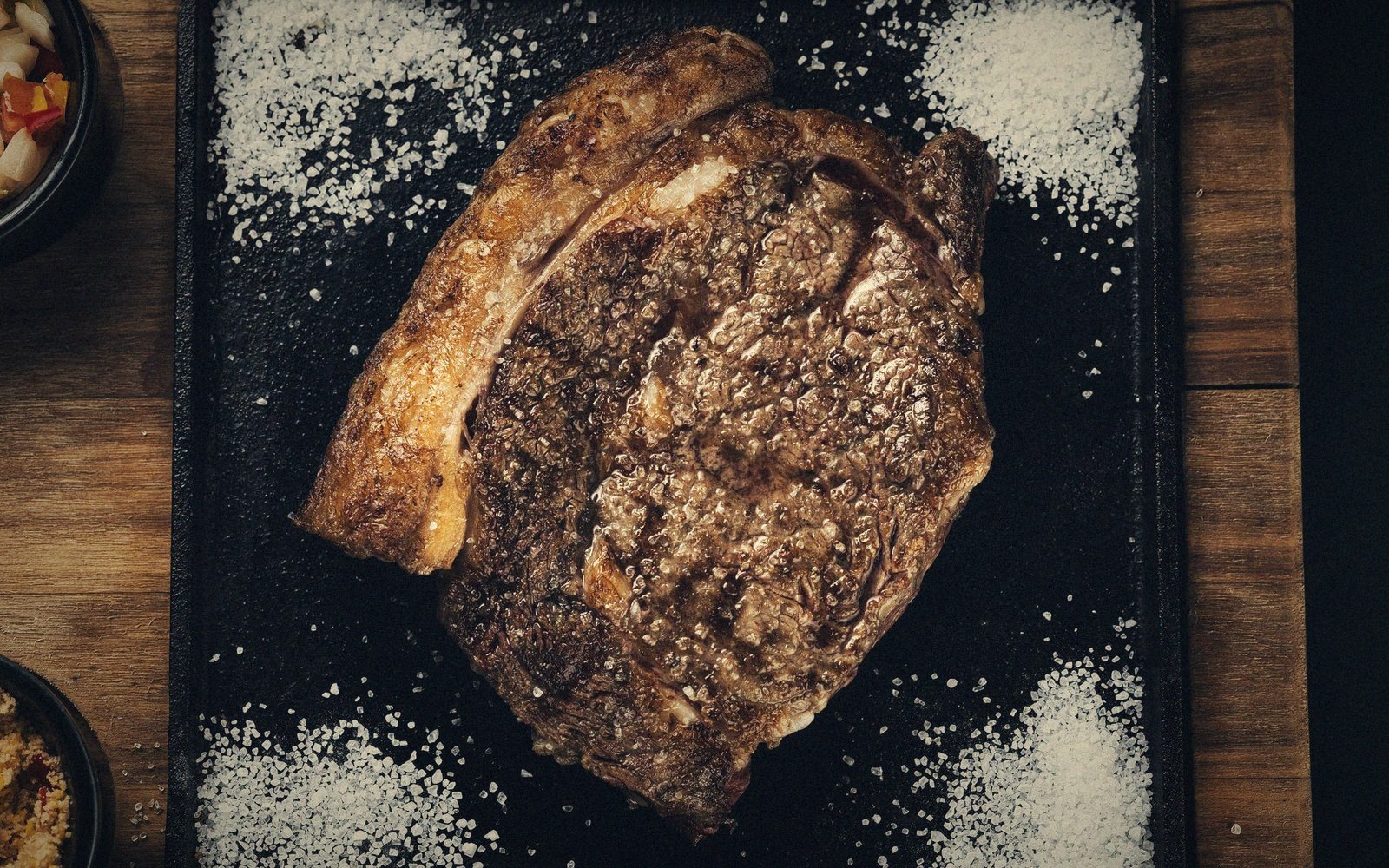
So the marks are not decoration and they are not worthless, but they are not the measure of a good sear either. They are evidence of the parts that cooked hardest, surrounded by the parts that cooked differently. Understanding the geometry means you can work with it — rotate deliberately, choose the surface that matches the result you want — rather than reading lines as a score.
both cooked, showing the difference in surface coverage
Photo: RDNE Stock project / Pexels
Read with this
Entries the register ties to this one.